
2027-02-24 · 3 min read
Which Sleep Training Method Is Right for My Toddler? Ferber, Chair, Fading & More Compared
Search sleep training and you will drown in confident, contradictory advice. Ferber devotees swear by timed checks; gentle-parenting voices reject them…
By AeternusVita
We make the products recommended here.
“Search sleep training and you will drown in confident, contradictory advice. Ferber devotees swear by timed checks; gentle-parenting voices reject them…”
Search sleep training and you will drown in confident, contradictory advice. Ferber devotees swear by timed checks; gentle-parenting voices reject them entirely; your neighbour swears the chair method saved her sanity. The truth is less dramatic: there is no universally best method, only the method your family can hold consistently for two weeks. This post compares the main approaches so you can choose with open eyes.
The five approaches, honestly described
Timed checks (often called Ferber) use brief, boring parental visits at increasing intervals to reassure the child while they learn to fall asleep independently. The chair method puts a parent sitting silently in the room, moving the chair further out every few nights. Fading reduces parental involvement gradually — shorter cuddles, earlier exits. Pick-up/put-down comforts then withdraws repeatedly. Child-led or "no method" approaches change nothing and wait for development to resolve the issue. Each has families who love it and families who quit it.

What actually predicts success
Research and parent experience agree on one uncomfortable finding: consistency predicts outcomes far more than the label on the method. A "gentle" method applied inconsistently — sometimes rocking to sleep, sometimes not, depending on exhaustion — teaches the child that protest sometimes works, which extends protest. Meanwhile any method held steadily for 10–14 days gives the child a learnable pattern. Before choosing, ask the harder question: which approach can both caregivers sustain at 3 a.m. on night nine?
The hidden variables: schedule, routine, and alignment
Methods fail most often for non-method reasons. An overtired toddler (bedtime too late) or an under-tired one (nap too long or too late) cannot learn independent sleep regardless of technique. A chaotic or screen-lit bedtime routine undermines every method equally. And caregiver disagreement — one parent sleep training while the other sneaks in old habits — sinks results faster than any wrong method choice. A sleep history audit and a realistic schedule by age matter more than the philosophical debate.
Night wakings are a separate problem from bedtime
Many parents pick a bedtime method and assume night wakings will follow. They often need their own plan: a decision tree for what to do at 2 a.m. depending on crying type, time since bedtime, and illness or teething signs. Knowing in advance when to comfort, when to wait, and when to pause the plan for sickness prevents the panicked improvisation that undoes daytime progress.
Partner alignment: the conversation to have first
Sleep training fails at midnight when exhausted partners disagree. Before night one, agree on the method, the check intervals, who responds to which waking, and under what conditions you pause (illness, vomiting, genuine distress). Write it down. The worksheet matters because at 2 a.m. nobody negotiates well — you just execute what past-you decided.
How this book helps
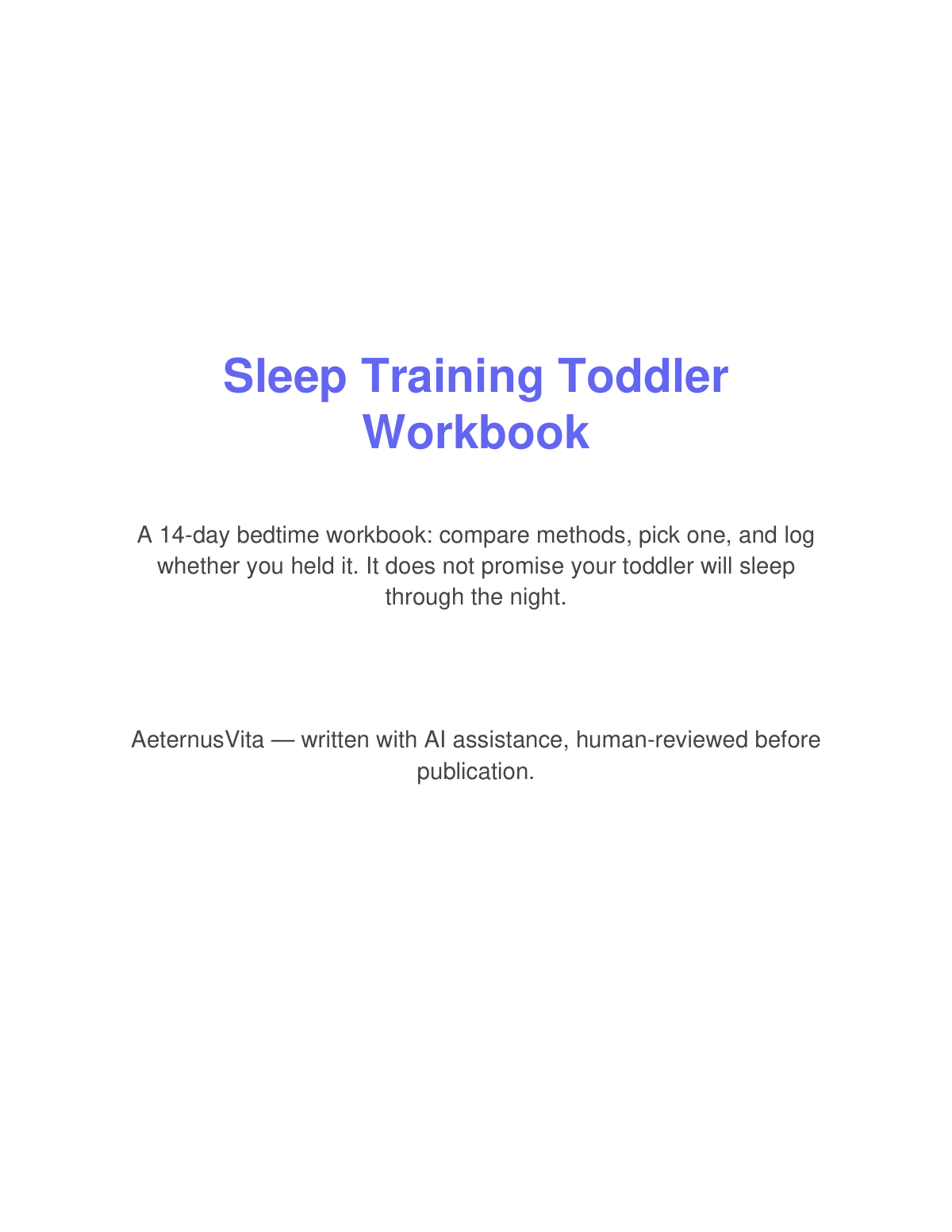
The Sleep Training Toddler Workbook is a 14-day bedtime workbook built for exactly this decision: a methods comparison so you choose deliberately, a sleep history audit, a custom schedule builder by age, a night-waking decision tree, a partner alignment worksheet, and a 14-day tracker for logging whether you actually held the plan. It makes no promise that your toddler will sleep through the night — it promises structure while you do the work. Find it in the books catalogue. Note it is not medical advice; consult a pediatrician about sleep concerns tied to health issues.
Tracking progress beats debating methods
Whatever you choose, write it down. The daily-log discipline that helps bakers master bread in the Sourdough Starter Tracker & Bake Log works on bedtime too, and parents rebuilding their own rhythms often appreciate the body-aware tracking in The Cycle Sync Method. Pick one method, align with your partner, log fourteen honest days — and then judge by the data, not by the debate.
Related articles
2027-02-26 · 3 min read
How to Use a 14-Day Sleep Tracker to Fix Toddler Night Wakings
Night wakings blur together in an exhausted parent's memory. Was it two wakings or five? Did the early bedtime help or hurt? Without a record, you…
Read article →2027-02-25 · 4 min read
Why a Consistent Bedtime Routine Matters More Than the Sleep Training Method
Parents obsess over which sleep training method to use and overlook the thing that does half the work for free: the bedtime routine itself. A…
Read article →2026-12-30 · 4 min read
How Sleep and Soreness Tracking Improves Athletic Performance
Performance isn't built in practice — it's built in the recovery between practices. Two athletes can train identically and develop differently, and the…
Read article →