 1 / 5
- 7 baseline nights
- 4 settling methods
- 14-night review log
- 49 printable pages
Toddler bedtime · Guide + workbook
Compare four ways to settle, then log 14 nights
Record seven real nights, compare four settling approaches and write the response the household agrees on. The 14-day log shows whether you held it.
- Seven baseline nights covering bedtime, naps, waking and comfort needs
- Parent presence, gradual fading, timed check-ins and responsive settling in one table
- A five-step wind-down taken from your child's actual day
- A night-waking decision tree next to a 14-day observation log
Sleep Training Toddler Workbook
£13
- +One 49-page PDF with the guide and workbook in one file
- +Chapter worksheets and action cards you keep where bedtime happens
- +The settling comparison table and the family schedule builder
- +A night-waking decision tree and a tracker for days 1 to 14
One-off payment. Download straight after checkout.
30-day refund. If it isn't useful, reply to your receipt within 30 days for a full refund.
Instant PDF Print or tablet Any device
What it is+
A toddler bedtime guide and workbook for observation and planning. You write down a week of real nights before you choose a settling approach. Then you keep a 14-day log of whether the household held that plan.
What's inside+
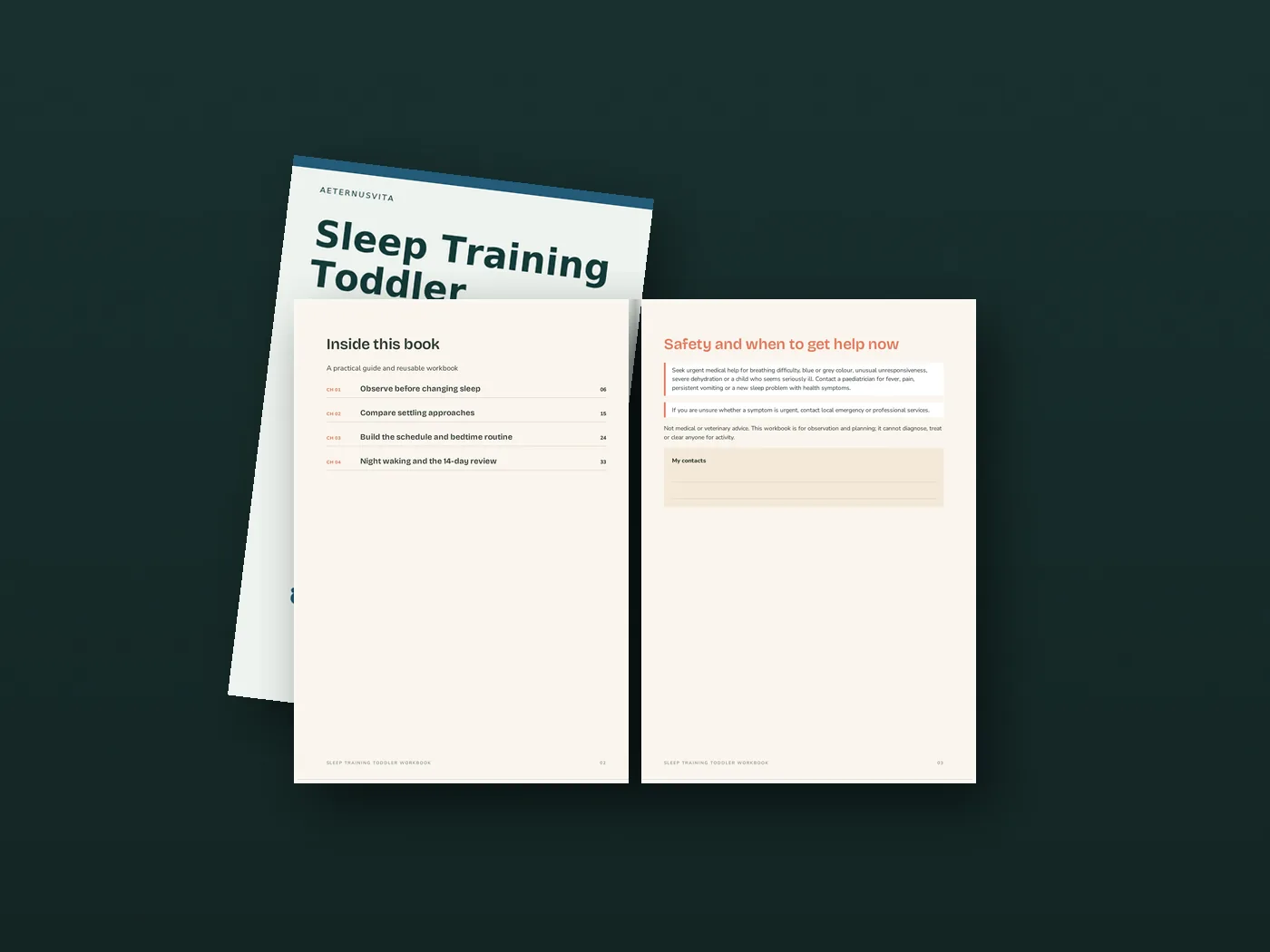
A safety page and a starting-point worksheet. Four chapters cover observing sleep, comparing settling approaches, building the schedule and routine, and reviewing night waking across 14 days. Two tables sit with them: the settling methods comparison and the family schedule builder.
How to use it+
Read the safety notes before the worksheets. Take one chapter at a time, from the decision and the worked example to your own facts. Keep that chapter's action card where bedtime happens. If a clinician has already given you instructions, follow those.
Delivery and refunds+
You get an instant download after payment: one 49-page PDF in a ZIP with a README. Refunds follow the policy shown at checkout.
Made for caregivers who need one written bedtime plan

The last nap keeps moving bedtime
Lights-low slides when the last nap runs late. Chapter 1 asks for seven dated nights before you choose a new window.

Everyone on the night does it differently
One person stays beside the bed. Another uses check-ins. Chapter 2 is where you write one comfort response and one pause rule for every caregiver.

A waking might be illness
Coughing, fever or unusual distress means the plan waits. The night-waking card puts a safety check before any settling step, and the log has a line for a paused day.
The problem
The method gets chosen before the week is written down
A late nap pushes lights-low later. One caregiver stays until the child sleeps. Another tries check-ins. Chapter 1 has you write seven nights, with illness and travel noted, before you choose one change. The schedule pages tell you to avoid rigid age-band sleep targets.


How it works
Seven nights on paper, then one shared response
You write bedtime, naps, waking and comfort needs for seven nights. Illness and travel go in the same notes. Four approaches sit side by side: parent presence, gradual fading, timed check-ins and responsive settling. Three of those rows pause for illness or marked distress. Responsive settling pauses when a caregiver or the child is overwhelmed. You agree the response the household can accept. From the child's actual day you write a five-step wind-down. A well child who wakes hears the one calm phrase you chose. Across 14 days the columns are bedtime, waking and comfort, nap, illness or change, and the next observation. Day 14 is when you review whether you held the plan.
This workbook vs generic sleep advice
Why the written week comes before the method
Chapter 1 treats a week of ordinary variation as data. You date bedtime, naps, waking and comfort needs, and you keep a separate note for illness or travel. The chapter tells you to look for a pattern. It tells you not to call ordinary variation a fault in the child.
The settling table leaves the choice with you. Parent presence asks if the child is comfortable with the next step. Gradual fading changes one familiar cue at a time. Timed check-ins ask whether every caregiver can follow the same plan. The action card keeps a timed approach unused if the child is sick, hurt or frightened. Responsive settling asks what comfort helps without overstimulation. The table states that no row promises a duration or a result.
The tracker is a learning record. Its columns are bedtime, waking and comfort, nap, illness or change, and the next observation. In the worked example, a child who wakes coughing and feverish gets care and the plan pauses. The log line reads "illness; plan paused." You review that pattern with every caregiver before anyone changes the plan. The action card says never to leave a child in medical distress to satisfy a tracker line.

Before any change01
Seven nights on the page first
Chapter 1 starts with seven baseline nights and a note of any illness or travel. You name one realistic bedtime window and one change. You review after several nights. In the worked example, bedtime shifts with a late nap. The parent discusses nap timing with a health professional if the sleep concern persists.

The settling table02
Four approaches, then one household choice
The four rows are parent presence, gradual fading, timed check-ins and responsive settling. The parent-present row is also called the chair. You stay nearby and change the distance when the child is comfortable with that step. In the gradual-fading example you begin beside the bed and keep one calm phrase. Presence reduces only when everyone is comfortable. Where medical needs affect sleep, the action card says to follow the child's clinician.

Night waking03
Safety first, then the 14-day log
The decision tree starts with breathing, responsiveness, fever, pain, vomiting and hydration. If the child is unwell, hurt or unusually distressed, you give comfort, pause the method and seek clinical advice. A well child gets the calm response and check-in plan you already chose, with light and conversation kept low. The tracker covers days 1 to 14. The page treats a blank or paused day as information.
As easy as it gets
Three moves, in this order.
1Step 1
Record seven nights
Write bedtime, naps, waking and comfort needs, and note illness or travel on the same page. Leave a blank where you do not know yet.
2Step 2
Choose the response
Pick from the four approaches and write a five-step wind-down from the child's day. The worked example lets the child choose between two books.
 3
Step 3
Log through day 14
The agreed phrase is for a well child. Illness means you pause and write that pause on the tracker. Day 14 is when every caregiver reads the rows together.
Timeline
What to expect
Nap times, illness and who is on duty at bedtime differ by household. Here is how the workbook is designed to be used.
Read the safety page
You read the urgent signs and the reasons to call a paediatrician before any worksheet. Then you answer the starting-point prompts. Where you do not know yet, you leave the blank.
What's inside
- Safety page: urgent signs and when to contact a paediatrician
- A starting-point worksheet, with blanks left where the answer is unknown
- Chapter 1: seven baseline nights before a single change
- Chapter 2: the settling methods comparison and a shared comfort response
- Chapter 3: the family schedule builder and a five-step wind-down
- Chapter 4: the night-waking decision tree and a tracker for days 1 to 14
Preview the pages
Still have questions?
Will my toddler sleep through by day 14?+
The night-waking card states there is no sleep-through promise at day 14. The log records whether the household held the plan, including nights you paused. Day 14 is a review of that record.
Is this medical advice?+
It is educational material for observation and planning. It cannot diagnose or treat. Seek urgent medical help for breathing difficulty, a blue or grey colour, unusual unresponsiveness, severe dehydration or a child who seems seriously ill. Contact a paediatrician for fever, pain, persistent vomiting or a new sleep problem with health symptoms.
Do we have to use timed check-ins?+
Timed check-ins are one row in the settling table, beside parent presence, gradual fading and responsive settling. You write down what this household finds acceptable. The book says not to use a timed approach with a sick, hurt or frightened child. Follow the child's clinician where medical needs affect sleep.
What if our child is ill, or we miss nights?+
You pause the plan. The worked example for a coughing, feverish waking is care first, then the log line "illness; plan paused." A blank or paused day stays in the tracker as information. If caregivers have drifted apart, chapter 2 is where you write one response again before you change the plan.
Does it set sleep hours by age?+
The schedule pages do not give an age band or a target number of sleep hours. You build wake, nap, dinner, wind-down and lights-low from the times you observed. If sleep difficulty persists and affects health or daily functioning, the action card points you to a paediatrician.
How do I get it, and do I need a printer?+
You get an instant download after payment: one 49-page PDF in a ZIP, plus a README. The worksheets are prompts and checklists you print and write on. Refunds follow the policy shown at checkout.
Instant PDF download · 49 pages · Print and write on the pages
Educational only. This workbook is for observation and planning. It is not medical advice and it is not a sleep treatment. No particular result is promised. Outcomes depend on your circumstances. Written with AI assistance, reviewed by AeternusVita.
Sleep Training Toddler Workbook