 1 / 5
- Seven-day audit
- Four minutes a night
- Days 30, 60 and 90
- 103 printable pages
Sober-curious journal · Guide + workbook
Write the week down before you decide
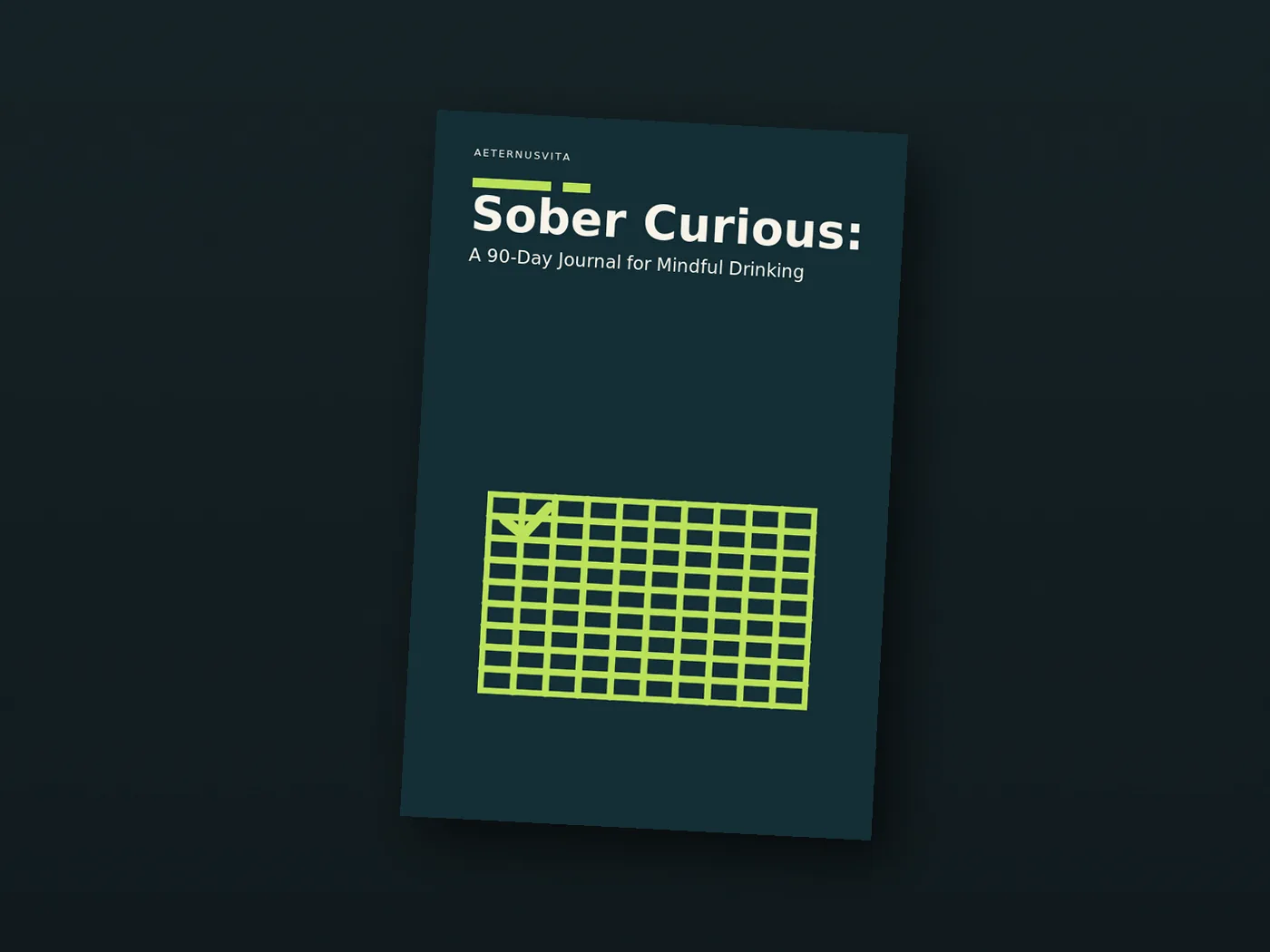
A private 90-day journal. Days 1 to 7 are a watching audit of your usual pattern, and they count inside the 90. Most nights take about four minutes, with a milestone page at days 30, 60 and 90.
- Seven-day audit: what you drank, rough units, time, the feeling just before, where you were, and the next morning
- Nightly grids already printed for all 90 days, about four minutes a night
- Thirteen weekly pages, each on a different slice of your own rows
- Eight recipes with amounts, and a fix for when the taste is wrong
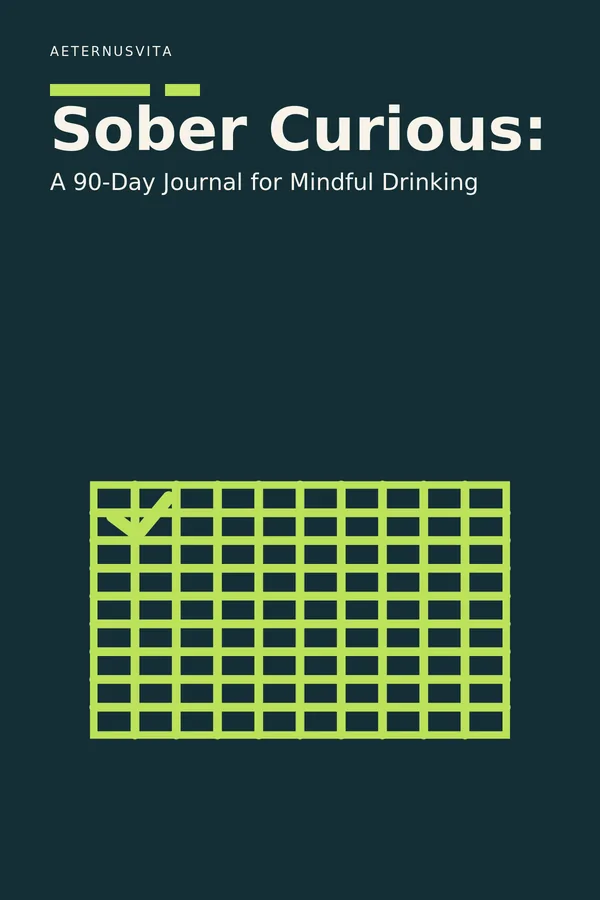
Sober Curious: A 90-Day Journal for Mindful Drinking
£11
- +One combined book PDF (guide and workbook in a single file)
- +Instant download: PDF files you can print or use on a tablet
One-off payment. Download straight after checkout.
30-day refund. If it isn't useful, reply to your receipt within 30 days for a full refund.
Instant PDF Print or tablet Any device
What it is+
A private 90-day journal for a question about your drinking. Days 1 to 7 are a watching audit, and they sit inside the 90. Most later nights are a four-minute row. Each week has its own questions. Days 30, 60 and 90 have milestone pages. Curiosity is reason enough to start. Chapter 1 leaves the verdict with you.
What's inside+
Eleven chapters cover a safety page, UK units, one evening swap, eight recipes, and lines for different rooms. The nightly rows are already in the file, fifteen days to a grid. Thirteen weekly pages run through day 90. The day after day 90 is a choice you can keep small, with a further 30 days you can count.
How to use it+
Write a start date and what counts as one drink, including a top-up. For seven days, log your usual pattern unless a doctor has told you to change. From day 8 you may try one swap, or write that you are leaving things as they are. Most nights, fill the row and close the book. Once a week, answer that week's page. Miss a night and you stay on the same day numbers.
Delivery and refunds+
Instant download after payment. The ZIP holds one combined book PDF, a README and a licence. 103 pages, set out as A4 fill-in pages. Refunds follow the policy shown at checkout.
Made for the week you want on paper

Weeknights crept past one glass
You still drink. Monday to Thursday may be a different pattern from Friday, and an ordinary Tuesday is easy to mislay. The first seven days are for writing that week down before a new rule.
You have already stopped
You want a daily practice that records more than staying away from a glass. Days 1 to 7 still get a row: craving, the old clock time, and who is in the room. You mark the week already stopped, so you can tell it apart from a typical drinking week later.

A room will offer you a glass
You want a sentence you can say twice, and a drink you would accept if a friend handed it to you. The book matches a short line to the room, with a note for when that line has turned into a lie.
The problem
Memory keeps the party and drops the Tuesday
A big night is easy to recall. A normal Monday is easy to mislay. A home pour is easy to call one glass, until you have tipped it into a jug once. A rule written before that week is on paper can describe the person you wish you were. These pages ask for the week first.


How it works
Seven days of watching, then four minutes
Days 1 to 7 count inside the 90. You fill the audit and the short scores on the first grid, keeping your usual pattern unless a doctor has told you to change. Later nights take about four minutes. You mark sleep, mood, energy and craving from 1 to 5, then your drink count, and one word that is a fact. Thirteen weekly pages follow, each on a different slice of the record, from the baseline to the last six days. On days 30, 60 and 90 you fill the milestone even if the weekly page falls on another evening.
This journal vs generic advice
The row stays short so a bad night still gets one
Each night you mark sleep, mood, energy and craving from 1 to 5, then the drink count and one factual word, such as payroll, rain, early or sofa. A worksheet asks you to retire a bland word, and "fine" is the one it names. That word throws away the only detail worth keeping.
Those 1 to 5 marks are your own scale. A hard month at work can move the same numbers, because alcohol is one influence among others. The sample Monday and Tuesday in chapter 4 are labelled as invented. They show what a useful word looks like. Your own rows are the record, dull ones included.
Miss a night and you stay on the same calendar. In the morning you write the drink count if you remember it, and the word missed for any score you no longer trust. Keep the day numbers. A restart at day 1 hides the days you already lived.

Days 1 to 701
Seven evenings of your usual pattern
You are looking for a repeat: a time of day, a feeling or avoided task just before the drink, a person, or a place. Nothing clear is a real result for week one. The day-7 worksheet has a line for writing that no time repeated. Measure your home glass once with a jug and reuse that figure. Top-ups count. If you lose track, write lost count after 4, rather than a flattering guess.

In the glass02
Eight recipes with the amounts written down
A drink you endure will not survive a wet Thursday. The table gives eight glasses, each with amounts and a fix if the taste is wrong. If it is too sweet, add lemon or a pinch of salt. If it is too harsh, add a little sweetness or more soda. One page is a ginger syrup you simmer once and keep in the fridge for up to a week. Salt, lime and soda is there for a pub with a short list. One recipe uses aromatic bitters, which are made with alcohol. Skip them, or use an alcohol-free bitter, if you want no alcohol in that glass. These drinks are something to pour. A recipe here is not a health treatment.

Other people03
A line you can say twice
Rooms offer a drink faster than they offer an exit. A table matches a line to the room: a top-up, a round, work, family, a wedding or a wake, and home. Beside each line is when to retire it, if it has turned into a lie. You then write three of your own, including one for the person who tops up your glass. The pocket card includes a line you can repeat: "I'm good with this, thanks." A script is a sentence you can say twice. The chapter is plain that it cannot make the room easy.

As easy as it gets
The same order, on an ordinary night.
1Step 1
Measure, then watch
Before day 1, pour your usual glass into a jug once and write the millilitres. For seven evenings, log the real pattern. A zero still gets a row.
2Step 2
Four minutes, then stop
Sleep, mood, energy, craving, drinks, and one factual word. Close the book. The weekly page is where the thinking goes.
3Step 3
Read the seven rows
On the weekday you chose, answer that week's questions and set one small experiment. On days 30, 60 and 90, fill the milestone as well.
Timeline
What to expect
Everyone's week looks different. Here is how these pages are designed to be used.
Write the agreements, or pause
Name the date you will call day 1, what counts as a drink, and where the journal will live. If a withdrawal flag fits, the book asks you to see a doctor before that date counts as a start. You can still fill the why-now pages while you wait.
What's inside
- Chapter 1. What the journal is for, who should see a doctor first, and the agreements you write once
- Chapter 2. Why now: the ordinary week, the hour you wanted to be present for, and what you fear losing
- Chapter 3. UK unit arithmetic, one measured home pour, and the seven-day watching audit
- Chapter 4. The four-minute nightly row, missed nights and heavier nights, and a pocket card for your bag
- Chapter 5. Pour, a ten-minute transition, or something to hold, plus a page for when a swap fails
- Chapter 6. Eight recipes with amounts, a ginger syrup, and a cupboard list you tick once before the week starts
- Chapter 7. Short lines matched to the room, who to tell, and a list for the hour before you leave
- Chapters 8 to 10. Six daily grids, thirteen different weekly pages, and milestones at days 30, 60 and 90
- Chapter 11. Three hedged choices for the day after day 90, a next 30 days you can count, and a note back to day 1
Preview the pages
Still have questions?
Is this a detox or a treatment programme?+
It is a private journal. The safety page says it is not medical advice, not a detox plan, and not addiction treatment. If you drink daily and heavily, the book tells you not to stop suddenly because a page suggested an experiment. Ask a doctor whether a taper, or support while you cut down, is the safer path. Shaking, sweating, confusion, a seizure, or drinking in the morning to stop the shakes are reasons to get clinical help and to stop using the journal as the plan.
Do I have to stop drinking, or take a label?+
Days 1 to 7 are for logging what you already do, unless a doctor has told you to change. From day 8 you may try one swap, or write that you are leaving the pattern as it is for now. If you have already stopped, you still use that first week to log craving, the old clock time, and who is in the room. A label is optional. The book mentions grey-area drinking and says you can ignore the phrase.
What if I miss a night, or several?+
For one missed night, write the drink count in the morning if you remember it, and put missed in place of the scores you no longer trust. For several missed nights, draw a line, write today's date, and continue the day number. The days you skipped stay skipped. Starting again at day 1 would drop the rows you already kept.
When should I stop and speak to someone?+
The safety page lists flags: withdrawal symptoms, morning drinking to stop shaking or sweats, blackout, thoughts of harm, and being about to drive, cycle, or look after a child while affected. If you are pregnant, might be pregnant, or trying to conceive, the page quotes UK public guidance to avoid alcohol and points you to a midwife or GP. The journal is not the plan for that. If anyone is in immediate danger, call 999. In the UK and across the EU, 112 reaches the emergency services as well. To talk, Samaritans are on 116 123, free, 24 hours, in the UK and the Republic of Ireland. For urgent advice that is not an emergency, in England, Scotland and Wales call 111. In Scotland that call reaches NHS 24. If your mood has dropped hard, the book says a row in a grid is not a crisis service.
What about 0.5% drinks and bitters?+
The agreements page asks you to decide whether drinks labelled 0.5% count in your number, and to write why. If you are pregnant or trying to conceive, the book tells you to ask a midwife or GP instead of deciding there. Many aromatic bitters are made with alcohol. If you want no alcohol in that glass, skip them or use an alcohol-free bitter. The book notes that grapefruit clashes with some medicines. If you have been told to avoid it, skip the rosemary grapefruit recipe.
Will my sleep, mood or spending change?+
The journal says it cannot promise better sleep, a calmer mind, a lower bill, or a particular identity on day 90. Sleep and mood have other causes, and the grid cannot prove what moved them. Milestone pages ask you to look at your own scores and to add up your own spend. The meaning stays yours. An honest record is what these pages can give you. The decision after that record is separate.
How do I get it, and do I need a printer?+
After payment you get an instant download: a ZIP with one combined book PDF, a README and a licence. You get 103 pages, laid out as A4 fill-in pages. The nightly rows are already there, fifteen to a grid. Print the PDF and write in the rows. Refunds follow the policy shown at checkout.
Instant PDF download · 103 pages · A4, print and fill in
Educational only. This journal is not medical advice, a detox plan, or addiction treatment. If cutting down brings withdrawal symptoms, see a doctor before you change your drinking. Written with AI assistance, reviewed by AeternusVita.
Sober Curious: A 90-Day Journal for Mindful Drinking