 1 / 5
- 14-day starter log
- 10 bake records
- Hydration reference
- 43-page PDF
Sourdough guide and reusable workbook
Track your starter and every bake
Record feeds, room temperature, hydration and timings in one place. Compare your notes when the next loaf comes out differently.
- A 14-day starter log for feeds, temperature, rise, smell and your next action
- Ten numbered bake records across five printable pages
- A hydration formula and worked example using flour and water by weight
- Troubleshooting notes to help you choose one variable to check next
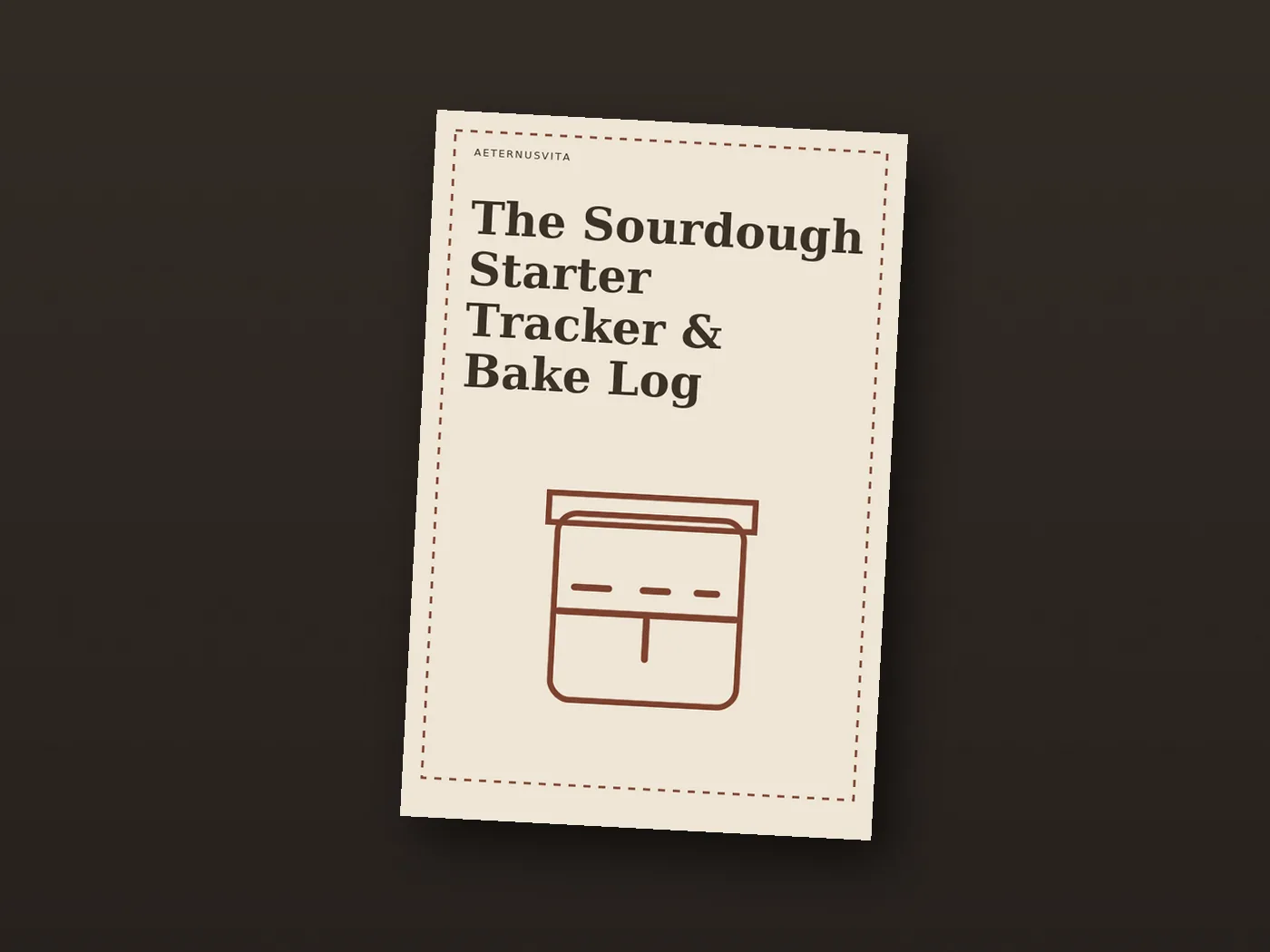
The Sourdough Starter Tracker & Bake Log
£5
- +One combined 43-page guide and workbook PDF
- +Starter log, bake records, hydration reference and troubleshooting notes
- +Instant download: PDF files you can print or use on a tablet
A digital product supplied as a ZIP. The six bread styles are prompts for your own formulas, not supplied recipes.
30-day refund. If it isn't useful, reply to your receipt within 30 days for a full refund.
Instant PDF Print or tablet Any device
What it is+
A practical guide and reusable workbook for observing a sourdough starter and recording bakes. Its pages give you a place to write down what happened before deciding what to try next.
What's inside+
The 43-page PDF includes starter guidance and a 14-day creation log. It also has hydration notes, ten numbered bake records and troubleshooting notes. A table names six bread styles, with space for your own recipe source and formula.
How to use it+
Start by dating a starter observation. Write the feed, temperature, rise and smell, then note the next check. For a bake, record the recipe source, ingredient weights, timings and result before choosing one change to test next time.
Delivery and refunds+
The ready listing specifies a delivery ZIP containing one combined 43-page PDF and a README. Check the seller's refund terms before purchase.
For the baker who wants a clearer record

You're watching a new starter
The jar changes from day to day. You want to record feeds, temperature, rise and smell before deciding when to check it again.

You're adjusting hydration
You weigh flour and water, then need somewhere to keep the percentage, dough feel and recipe source together.

You're comparing two loaves
One loaf spreads and the next holds its shape. You want the timings, formula and proof notes in front of you before changing the method.
The problem
A loaf is hard to compare from memory
You remember how the loaf looked, but the feed time, room temperature or length of the bulk rise is harder to recall. A useful comparison starts with the details you actually measured. The log keeps those details beside the result, so you can choose a single next adjustment from your own notes.
How it works
Observe, record, compare
First, note what you feed the starter and how it behaves. For a bake, write down your recipe source, weights, mix and fermentation times, oven setup, crust and crumb. When you bake again, compare those entries and pick one variable to test. The book supplies the prompts; your observations fill the gaps.
This tracker vs generic baking advice
The details have somewhere to go
The starter pages ask for flour, water, feed time, room temperature, rise and smell. A dated entry gives you more to compare than a vague memory of a bubbly jar.
The hydration reference shows the calculation by weight. A worked example uses 300 g water and 400 g flour to show 75% hydration before other wet ingredients.
The bake pages separate the formula, fermentation, shaping, proof, oven setup and result. That separation makes it easier to see what you changed between entries.

01 Starter observations01
Follow the jar across 14 days
The creation log has dated rows for flour, water, feed time, room temperature, rise, smell and the next action. It asks you to observe the culture over time rather than expect readiness on a fixed day.
02 Bake records02
Give each loaf its own record
Ten numbered records across five printable pages ask for the recipe source and ingredient weights. Add timings, oven setup, crust and crumb. Each record has space to name one next change.
03 Troubleshooting03
Check the notes before you change the method
The quick card suggests reviewing feed and temperature for little rise. For dense crumb, it points to fermentation and shaping. For a spreading loaf, it points to hydration, strength and proof. Your entries help you decide what to examine first.
As easy as it gets
Use the page that matches what is in front of you.
1Step 1
Date a starter entry
Write the feed and room temperature. Note the rise, smell and your next check.
2Step 2
Log the bake
Copy the recipe source, weigh the ingredients and write down the times you actually used.
3Step 3
Choose one next test
Describe the crust and crumb, then use the record to pick one variable to change next time.
Timeline
What to expect
The book is designed as a working record. Your starter and bakes set the pace.
Start with what you can observe
You could label the jar, record a feed and mark the level. Leave an uncertain detail blank until you can check it.
What's inside the 43-page PDF
- Guidance and worksheets for observing a new starter
- A 14-day starter creation log for feeds, room temperature, rise and smell
- Feeding and hydration guidance, with a weight-based formula and worked example
- Ten numbered bake records across five printable pages
- Troubleshooting notes for little rise, dense crumb, spreading loaves and excessive sourness
- A table for country loaf, wholegrain loaf and rye blend, plus sandwich loaf, focaccia and rolls. These are style names with space for your own formulas.
Preview the pages
Still have questions?
How many pages is it?+
The ready listing specifies one combined 43-page guide and workbook PDF.
Does the 14-day log tell me when my starter is ready?+
It gives you rows for observations across 14 days. The guide asks you to compare what the culture does rather than assume readiness on a fixed day.
Are six bread recipes included?+
The six bread styles are names in a logging table. You supply the recipe source, your formula and result notes; the book does not provide six complete recipes.
Is there an automatic hydration calculator?+
The PDF gives a reference formula and a worked example. You calculate hydration from the flour and water weights you record.
Can I reuse the bake logs?+
The PDF contains ten numbered bake records across five printable pages. You can print pages again for later bakes.
How is it delivered?+
The ready listing describes a ZIP containing the combined PDF and a README. Check the seller's refund terms before purchase.
Digital ZIP · 43-page PDF · Printable bake logs
Educational content only. Follow reliable food-safety guidance and ordinary kitchen care; discard starter showing mould or unusual discolouration. Written with AI assistance, reviewed by AeternusVita.
The Sourdough Starter Tracker & Bake Log