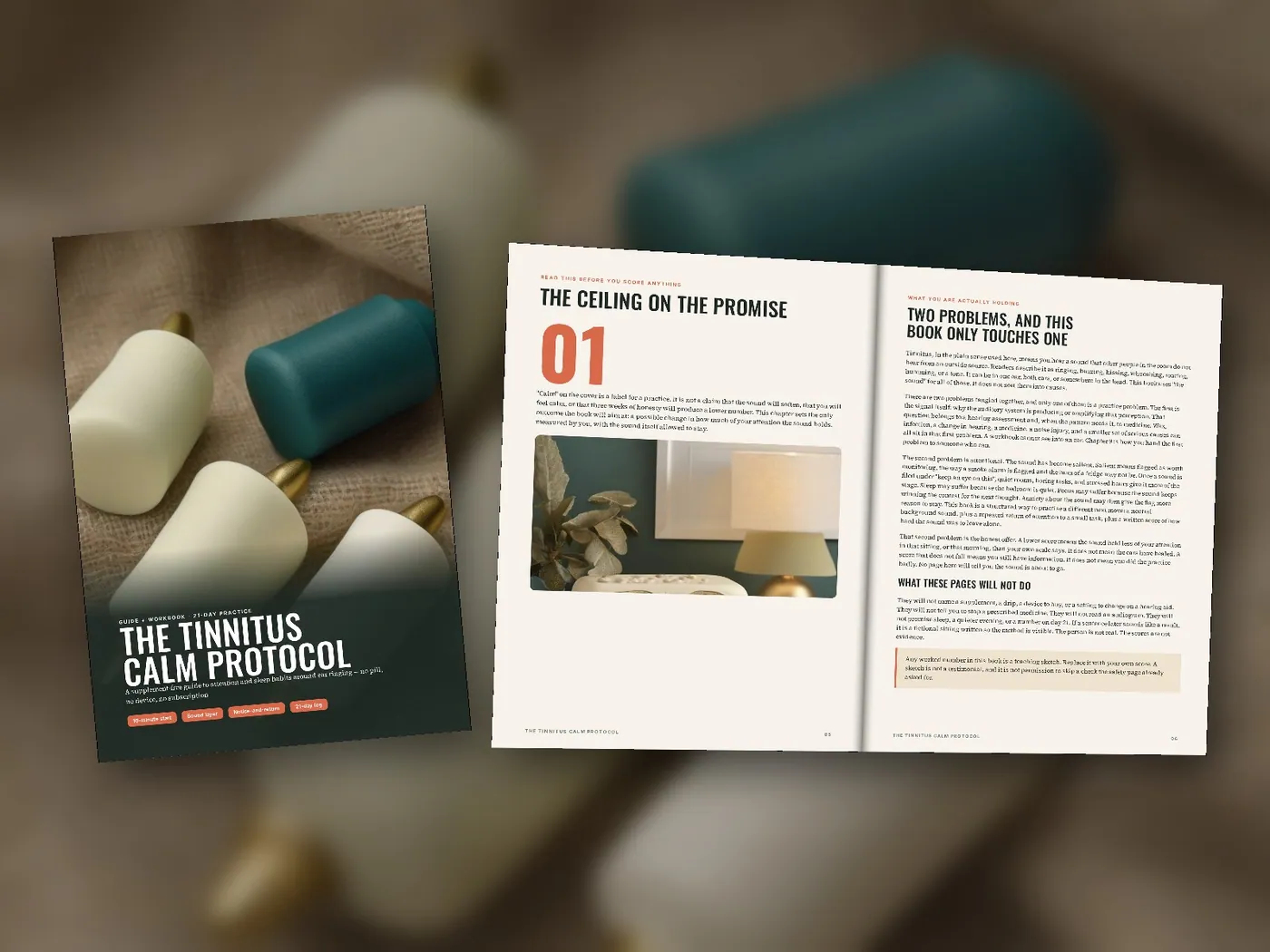
 1 / 5
- 10-minute start
- 21-day workbook
- Bedtime sequence
- Safety checklist
Tinnitus · Guide and workbook
A practical guide to tinnitus and attention
When ringing keeps drawing you back, start with a 10-minute exercise. The book then guides a daily notice-and-return practice and a 21-day record of your experience.
- Try the first sound-layer and attention session in 10 minutes
- Choose a low background sound from things already in your home
- Practise notice, name, return with a task you choose in advance
- Record daily attention scores, weekly reviews and spikes
The Tinnitus Calm Protocol
£15
- +Guide to sound enrichment, attention practice, bedtime and difficult days
- +21-day workbook with daily tracking and weekly review pages
- +Sound-layer, night and spike cards, plus an upfront safety checklist
One-off purchase. Digital download after checkout.
30-day refund. If it isn't useful, reply to your receipt within 30 days for a full refund.
Instant PDF Print or tablet Any device
What it is+
An educational guide and workbook about attention and sleep habits around tinnitus. It teaches a repeatable practice and a way to log your own experience. It does not diagnose the cause of a sound or promise that it will disappear.
What's inside+
Nine chapters take you from the first 10 minutes through sound enrichment, attention practice and bedtime. They also cover spikes, the 21-day log and when to seek professional assessment. The workbook includes daily tracking and weekly reviews.
How to use it+
Read the safety page first. If it is appropriate for you to continue, try the 10-minute session, choose a tolerable sound layer and record your attention score. The following pages set out a daily practice and a three-week log.
Delivery and refunds+
This is an instant digital download after checkout. Check the refund terms displayed at checkout before buying.
For the hours when the sound keeps claiming your attention

You keep losing your place
You sit down to read or work, then find yourself checking the sound again. The book gives the return of attention a specific destination.

The quiet evening feels loud
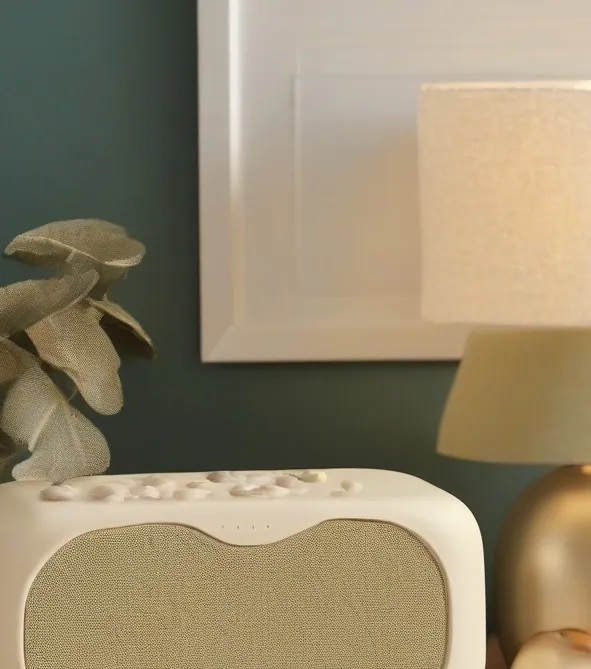
The room settles and the sound takes up more space in your mind. The sound-layer chapter helps you choose a low background source already at home.
Bedtime becomes a listening session
You want a sequence to follow at lights-out. The night card sets out the book's steps and a seven-night log gives you somewhere to record them.
The problem
The sound can take over the quiet parts of a day
You might notice it most when the room goes still, then check again to see whether it has changed. By bedtime, the checking can be as tiring as the sound. The guide starts with what you can observe and write down, while keeping the question of cause for a clinician.


How it works
Add a sound. Notice the ringing. Return to a task.
The book pairs a low, steady sound in the room with a small task chosen before you begin. When tinnitus draws your attention, you name the moment and return to that task. You score how much attention the sound held before and after the session. Those scores describe your experience; they do not measure hearing or promise a lower number.
This guide and generic tinnitus advice
A workbook that makes room for an unchanged score
The first session shows how to score your attention, set a sound layer and return to a task. A worked example ends at the same score it started with, so the method does not depend on an instant change.
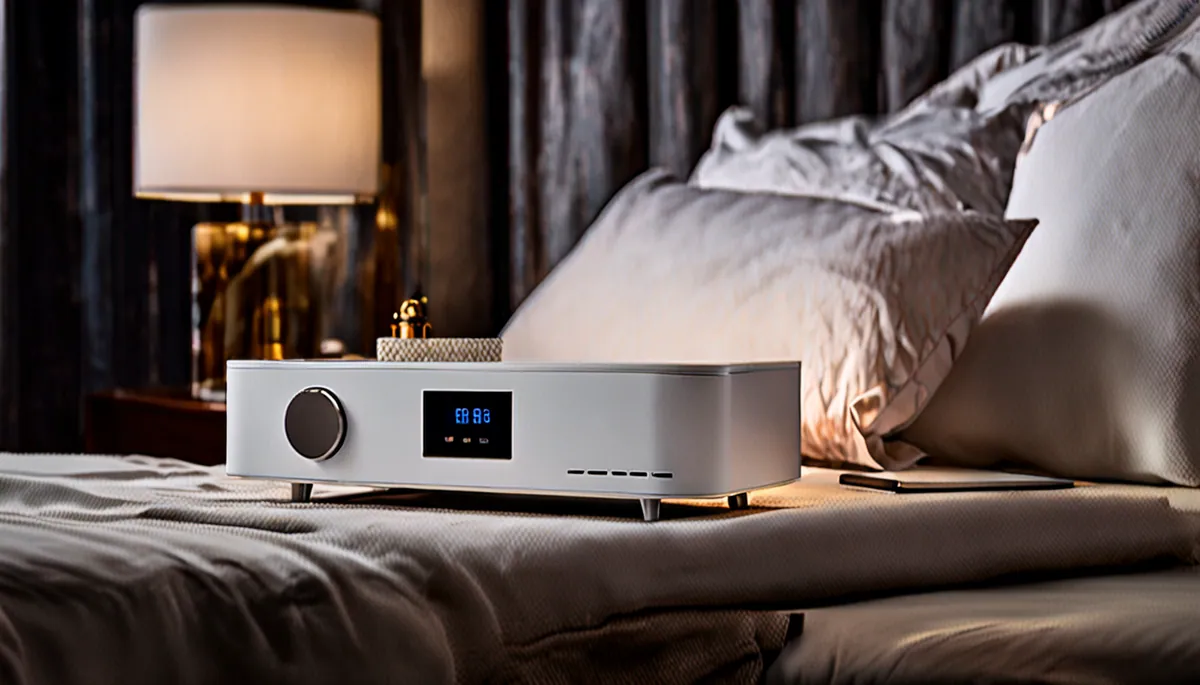
The guide distinguishes a background layer from a sound loud enough to drown tinnitus out. Its sound-kit page asks you to choose ordinary household sources and record the setting in words you can use again.
The workbook leaves space for missed days, difficult nights and spikes. Its safety page also tells you when a workbook is the wrong next step and a professional assessment matters more.

01 · The sound layer01
Use the fan you already have
The source table covers a fan, a phone or computer track, water and other familiar sounds. A sound-kit sheet helps you choose two or three tolerable options, keep the volume low and place the sound across the room. The aim is a background layer you can still hear past, not a louder contest.

02 · The daily practice02
Give your attention somewhere to go
The notice-and-return chapter turns a vague instruction to ignore ringing into a 10–15 minute session. Pick a modest task, label the moment you notice the sound, then return to the task. The log records the session even when the score stays put.
03 · The 21-day log03
Keep the awkward days in the record
Daily attention scores sit beside weekly reviews and a separate spike log. The book explains how to leave missed days blank and how to review a week with incomplete entries. On day 21, the decision page offers branches for what, if anything, you keep doing.
Three moves to begin
The first sitting is laid out as a 10-minute exercise.
 1
Step 1
Check the safety page
Read the red flags before treating the exercises as your next step. The book directs some patterns to a clinician instead.
2Step 2
Choose a low sound layer
Try a fan or a quiet recording from across the room. Keep normal conversation and important alerts audible.
3Step 3
Score, practise and record
Mark how strongly the sound holds your attention, do the notice-and-return drill, then write a second score. Either score belongs in the log.
Timeline
How the three weeks are laid out
These stages describe the pages you can use, not a timetable for feeling different.
Try the first 10 minutes
Read the safety page first. If it is appropriate to continue, you can score your attention, set a low sound layer and practise returning to a task. Record a second score afterwards.
What's inside the guide and workbook
- Chapter 1: the limits of the practice, an attention scale and a sound portrait
- Chapter 2: a 10-minute first session, day-one record and pocket card
- Chapter 3: a plain-language account of attention and sound contrast
- Chapter 4: partial sound enrichment, source table and sound-kit sheet
- Chapter 5: notice-and-return, a task menu and weekly-score guidance
- Chapter 6: a bedtime sequence, night card and seven-night log
- Chapter 7: a spike card and log for difficult days
- Chapter 8: three weekly trackers, reviews and a day-21 decision page
- Chapter 9: when to stop, shorten or bring your notes to a hearing appointment
Preview the pages
Still have questions?
Will this make the ringing go away?+
The book makes no promise that the sound will change. It teaches an attention practice and a way to record how much attention the sound holds for you.
What do I get?+
A 72-page digital guide and workbook. Inside are the 10-minute first session, daily practice and bedtime guidance. The tracking pages cover 21 days, with weekly reviews and a spike log.
Do I need to buy a sound machine?+
No. The guide starts with sources you may already have, such as a fan or a quiet phone recording. It explains how to keep a layer low and use a tolerable source.
What if I miss a day or my score rises?+
Leave a missed day blank and record a higher score honestly. The workbook includes guidance for incomplete weeks and a separate place for spikes. Neither entry is presented as a failure.
When should I speak to a professional?+
Read the safety page before starting. The book directs sudden hearing change, an unassessed one-sided sound, a pulse-timed sound and other red flags to professional assessment. It is not a diagnosis or treatment.
How is it delivered, and what about refunds?+
It is a digital download after checkout. Check the refund terms shown at checkout before buying.
Instant digital download · 72 pages · Guide and workbook
Educational only. This guide is not medical advice, a diagnosis or a treatment for tinnitus. It does not replace a professional hearing assessment, especially for a sudden change, unassessed one-sided tinnitus or a sound in time with your pulse. Written with AI assistance, reviewed by AeternusVita.
The Tinnitus Calm Protocol