 1 / 5
- Two wardrobe plans
- 12 outfit formulas
- Fit and fibre checks
- Wardrobe audit
Style guide · Wardrobe workbook
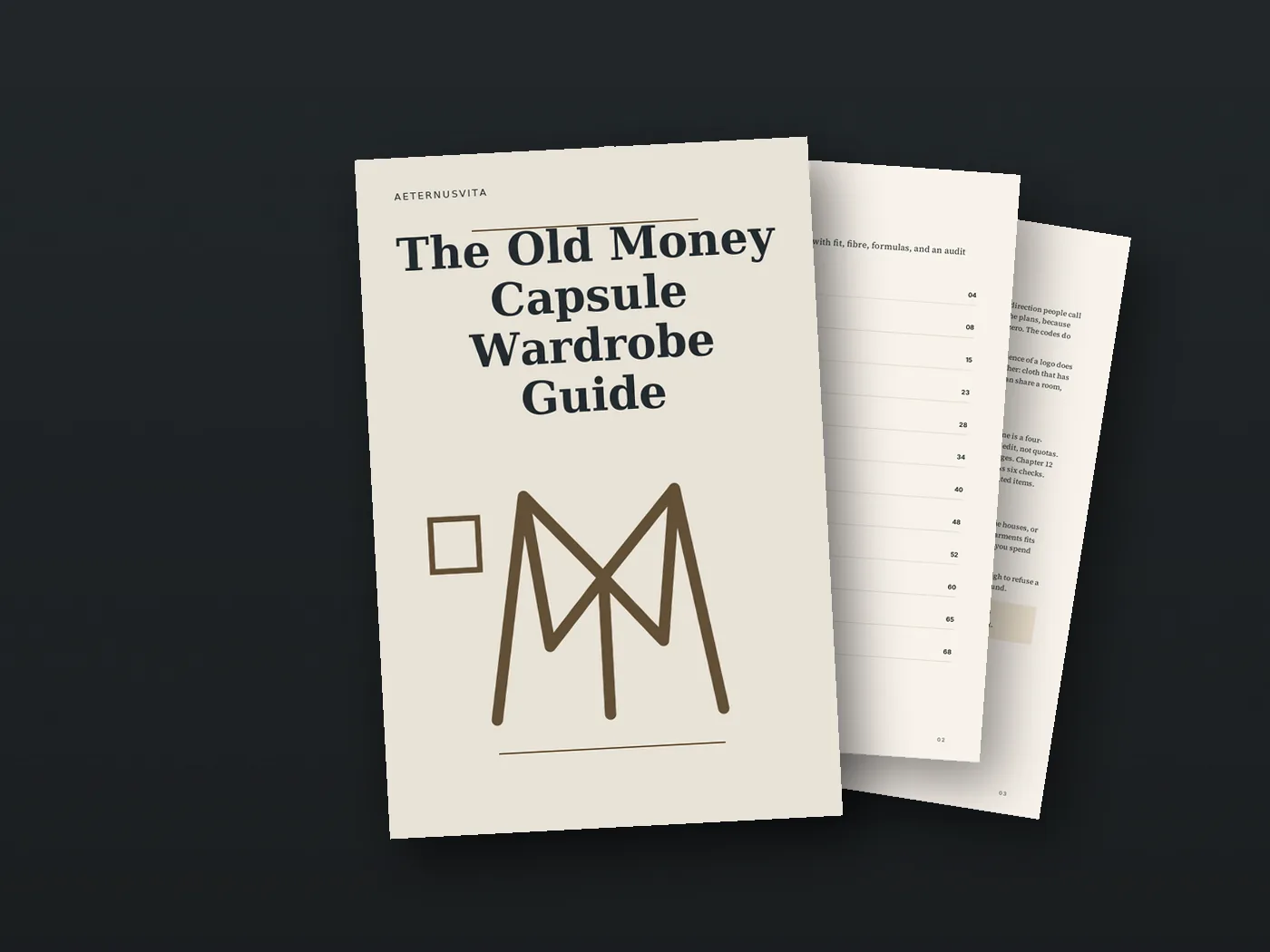
The Old Money Capsule Wardrobe Guide
Build a quiet, tailored wardrobe from clothes you own. Audit one category, choose your counts and use fit, fibre and outfit formulas to guide purchases.
- Compare a 23-piece four-season plan with a 19-piece hot-climate plan, then set counts for your life
- Check fit with six points and inspect a garment with ten shop-floor checks
- Work through twelve outfit formulas, including one taught piece by piece
- Audit what you own before making a gap list or deciding what to spend
The Old Money Capsule Wardrobe Guide
£13
- +One combined book PDF (guide and workbook in a single file)
- +Instant download: PDF files you can print or use on a tablet
One-off payment. Digital ZIP delivery.
30-day refund. If it isn't useful, reply to your receipt within 30 days for a full refund.
Instant PDF Print or tablet Any device
What it is+
A style and shopping guide for an adult wardrobe in the quiet, tailored direction called old money or quiet luxury. It starts with cloth, cut, colour and restraint, then asks you to edit your own cupboard before shopping.
What's inside+
The guide has two worked wardrobe plans, a fit pass, a fibre reference and shop checks. It also covers the audit, twelve outfit formulas, seasonal rails and secondhand searches. The guide and workbook are in one combined PDF.
How to use it+
Read the style codes, set counts for your climate and week, then audit one clothing category at a time. Use the fit and fibre checks on any gaps you decide to fill. The plans are examples, not shopping quotas.
Delivery and refunds+
The listed delivery is a ZIP containing one combined book PDF, a README and the licence. Check the refund terms before payment.
For the wardrobe you actually wear
You like the tailored look
You have saved the pictures, but need a way to judge cloth, colour and fit in your own cupboard.
You want to plan before buying
You would rather find the real gaps first than treat a capsule list as a shopping basket.
You check the full cost
You shop secondhand or compare repair and alteration costs before calling a piece a bargain.
The problem
A saved outfit is not a wardrobe plan
A photo can show a trench and loafers. It cannot tell you whether your blazer fits, which trousers you already own, or what your climate needs. A fixed shopping list skips those decisions. This guide starts with the clothes on your rail and gives each possible addition a job.
How it works
Set the standard, then inspect the rail
The book gives five style codes and two added-up wardrobe plans. Choose counts for your climate and week, then audit one category at a time. Keep what fits the plan, note repairs and write down real gaps. Fit, fibre and condition checks come before the chapter on spending or secondhand searching.
This guide vs generic wardrobe advice
The audit decides what belongs on the list
The two plans show their sums: 23 pieces for a four-season middle and 19 for a hot-climate middle. You change the rows for your work, weather and clothes you already wear.
The audit moves through one category at a time. An eight-item illustration shows how to keep, pass on or replace pieces, while the log holds your own decisions.
A gap is only useful when you can name its role. The fit pass, fibre reference and condition checks give you questions to take into a shop or a secondhand search.
Fit and fabric01
Inspect the garment beyond its label
The six-point fit pass checks how a piece sits and moves on your body. A separate fibre reference covers silk, cashmere, wool, linen, cotton and leather. Ten shop-floor checks take you through seams, stress points, measurements and the possible repair sum before you decide.
The wardrobe audit02
One category, three decisions
The audit works through keep, pass on and replace. A worked eight-item example shows the difference between a repair and a genuine gap. The log gives you room to record what stays, what needs work and what to review next.
Spending and secondhand03
Buy for a gap you can name
The money chapter treats cost per wear as arithmetic you redo with real prices. It orders purchases after the audit and offers tier swaps without brand names. The secondhand chapter adds garment search terms, filters, seller questions and a condition checklist. Prices and availability vary.
As easy as it gets
Read, audit, then plan an outfit.
 1
Step 1
Start with what you own
Read the five codes and audit one category. Record keeps, repairs and gaps before spending.
 2
Step 2
Set your own counts
Use the two worked plans as starting points. Change the rows for your climate, routine and existing clothes.
 3
Step 3
Choose a formula
Try one of twelve outfit templates with pieces you kept. The first formula shows the choices in full.
Timeline
What to expect
The book offers a sequence you can adapt. Your wardrobe, climate and budget set the pace.
Learn the five codes
You could read the style, count, fit and fibre chapters before looking at anything new. Mark which parts suit the clothes you already wear.
What's inside
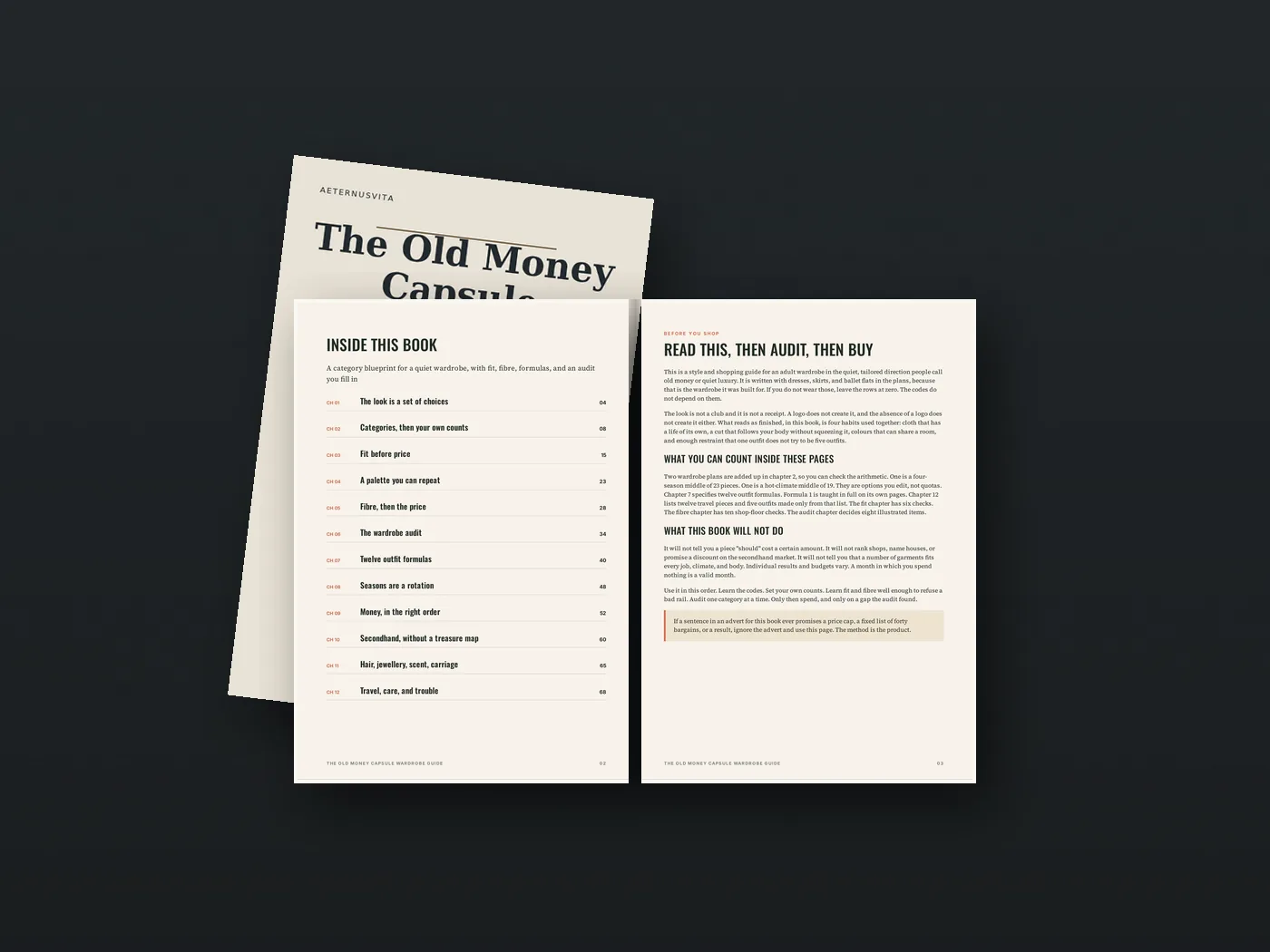
- Five style codes, a worked outfit rewrite and a shop reference card
- Category ranges with a 23-piece four-season plan and a 19-piece hot-climate plan
- Six-point fit pass, garment measurement reference and alter-or-replace guidance
- Personal palette worksheet, fibre reference and ten shop-floor checks
- Category-by-category wardrobe audit with an eight-item worked illustration and log
- Twelve outfit formulas, a morning card and warm and cool seasonal rails
- Cost-per-wear example, purchase order, tier swaps and a six-month acquisition log
- Secondhand search guidance, seller questions and a condition checklist
- Twelve-piece travel list, five travel outfits, care guidance and a 90-day sequence
Preview the pages
Still have questions?
Is this a list of 40 pieces to buy?+
No fixed 40-piece shopping list is provided. The book has two worked plans of 23 and 19 pieces. Both are starting points that you edit for your climate, routine and existing wardrobe.
How many outfit formulas are included?+
Twelve. Formula 1 is taught in full, and formulas 2 to 12 are specified templates. The travel chapter also lists twelve pieces and five outfits made from them.
Do I need to wear dresses or skirts?+
The example plans include them. Set those rows to zero if you do not wear them. Your own counts come from your life and clothes.
Will it tell me which brands or shops to use?+
The book gives tier swaps without brand names and secondhand searches by garment. It does not rank shops or promise a discount.
Does it promise a clothing budget or a result?+
It sets no price cap. Prices vary by shop, season and country, and individual budgets vary. The cost-per-wear example is arithmetic for you to redo with your own figures.
What do I receive?+
The listed delivery is a ZIP with one combined book PDF, a README and the licence. The page count for this edition is 78 pages.
What about refunds?+
Check the refund terms before you pay.
Digital ZIP · One combined book PDF · 78 pages
Educational style and shopping guidance only. Individual wardrobes, budgets and results vary. Written with AI assistance, reviewed by AeternusVita.
The Old Money Capsule Wardrobe Guide