 1 / 5
- Vet sets the grams
- Meals on a clock
- Separate cat bowls
- 68 printable pages
Guide + workbook · Vet-set pace
Carry the vet's plan on a Tuesday night
Weigh what you offer and what is left, then take that page to the recheck. Each cat has a bowl the others cannot raid, and a puzzle uses part of the same daily amount.
- A question list for the consult, and a fridge sheet you fill the same day
- Offered grams and leftover grams, both read from the scale
- A place for each cat to eat, and a written rule for who may open the bag
- One script for the meow after the meal, plus a card for a refused meal
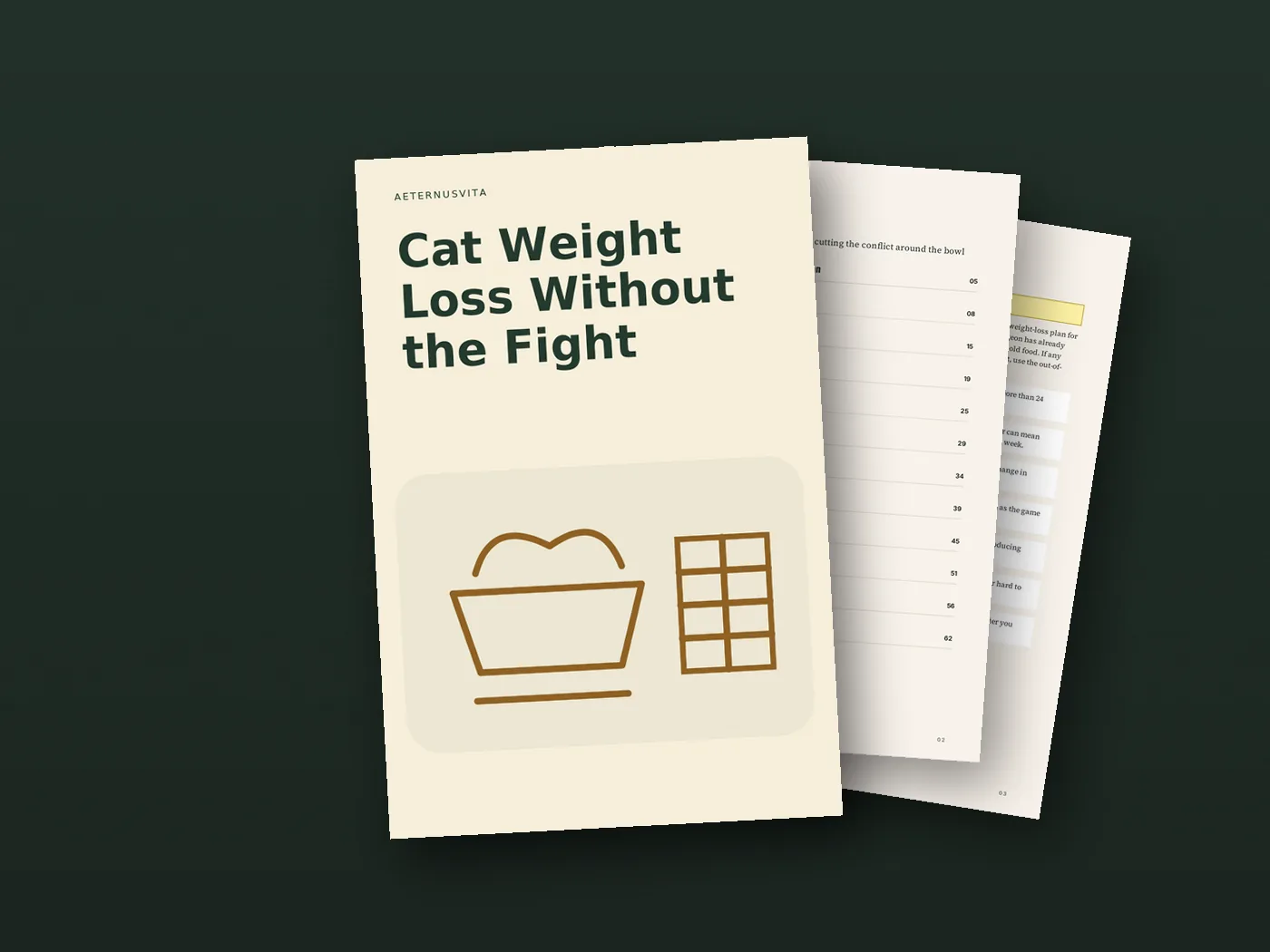
Cat Weight Loss Without the Fight
£11
- +One combined book PDF (guide and workbook in a single file)
- +Instant download: PDF files you can print or use on a tablet
One-off payment. The ZIP downloads straight after checkout.
30-day refund. If it isn't useful, reply to your receipt within 30 days for a full refund.
Instant PDF Print or tablet Any device
What it is+
A guide and workbook for the kitchen around your cat's food. Your vet sets the daily amount and the pace. You weigh the meals and log what was eaten for the recheck. Each cat has a place the others cannot raid.
What's inside+
Twelve chapters, from the safety page and the consult through to the recheck bag. Fridge cards, logs and an eight-week map sit beside your vet's figures. The guide and workbook are in one combined PDF.
How to use it+
Read the safety page first. Take the question list to the vet. If the visit is still ahead, keep the current food and amount. You can put a scale by the bag and feed cats apart. Copy their figures onto the plan sheet and take the logs to the recheck.
Delivery and refunds+
Instant PDF download after payment. The ZIP contains one combined book PDF, a README and the licence. 68 pages. Refunds follow the policy shown at checkout.
Made for the home where food has become a fight
You add a handful on the loud night
You hold the line, then add a handful when the meow goes on too long. The next night tends to start louder. You get one written answer for after the measured meal is gone.
Two cats, one bowl
You want the heavier cat to eat less, and the slimmer cat may be getting pushed off the shared bowl. Separate places keep each portion with the right cat, so the log can name who ate.
The visit is still ahead
The appointment is days away and a smaller scoop is tempting. Until your vet writes the amount, keep the current food and the current portion. You can put a scale by the bag and feed cats in separate rooms before any cut.
The problem
Hunger, boredom, and a bowl with no end
You cut the scoop because you are worried about your cat's weight, and the cupboard meow gets worse. On the night you're tired, a handful goes in. The next night starts louder. With two cats at one bowl, neither cat has a gram total you can trust. This book names five patterns, each with the change that matches it. You wait to cut any grams until a vet has written the amount.
How it works
Your vet writes the number. You run the evening.
Your vet records today's weight and a body condition score on their chart. You leave with the food name, the daily amount, the pace and the recheck date. At home you weigh what you offer and what is left. Each cat eats where the others cannot raid the bowl. A puzzle uses part of that same amount. You take the log to the recheck.
This guide vs generic cat diet advice
Details that keep a vet's number intact
The daily amount is a ceiling and a floor. A day eaten far under your vet's figure goes in the log and, if it lasts, it is a phone call.
Weigh the food in single grams. A level cup and a heaped cup of the same food weigh differently. That gap is why the plan drifts while everyone swears they fed the usual.
The first consistent nights are often louder. A behaviour that used to earn food often gets bigger when it stops earning food, before it fades. Check that the full amount was eaten, and phone if meals start coming back uneaten.

Measured meals01
An always-full bowl cannot be logged
Weighed meals replace the all-day bowl. Two to four servings is the usual split, and they still add up to your vet's daily total. One chapter follows a meal from the scale's tare to the leftover grams. Those leftovers stay in the same day. Where insulin sets two meal times, that clock wins.
Multi-cat homes02
A shared bowl feeds the cats unequally
The faster cat takes the larger share, and the other can look picky while being pushed off the food. A plan for the heavier cat can then underfeed the slimmer one. You get a worked Tuesday, a setup checklist and a station map. The map includes a backup if a door or a feeder fails.
Play and puzzles03
The game is served from the same grams
Short hunt-shaped play gives the day a shape beyond the kitchen. Serve a puzzle or a training reward from the agreed amount. If your cat walks away, put the rest of that portion back in the bowl the same day. Stop if your cat is sore, or still panting when the game ends.
How a Tuesday is meant to run
Three jobs, once your vet has written the grams.
 1
Step 1
Fill the plan sheet
Copy the weight, condition score, food, daily amount, rate and recheck date. An empty box means you still need to ask.
2Step 2
Serve a known meal
Zero the bowl on the scale, note the grams you offer, and weigh anything left. Leftovers stay inside today's total.
 3
Step 3
Take the log back
Write what was eaten, extras included. If a meal is refused, offer the last amount your cat was eating and phone your vet.
Timeline
What to expect
Every cat and every clinic note is different. Here's how the book is designed to be used.
Read the limit first
Read the safety page before any bowl moves. If the appointment is still ahead, keep the current food and the current amount. Put a scale by the food so a later baseline is in grams. Feed cats in separate rooms so you can see who eats.
What's inside
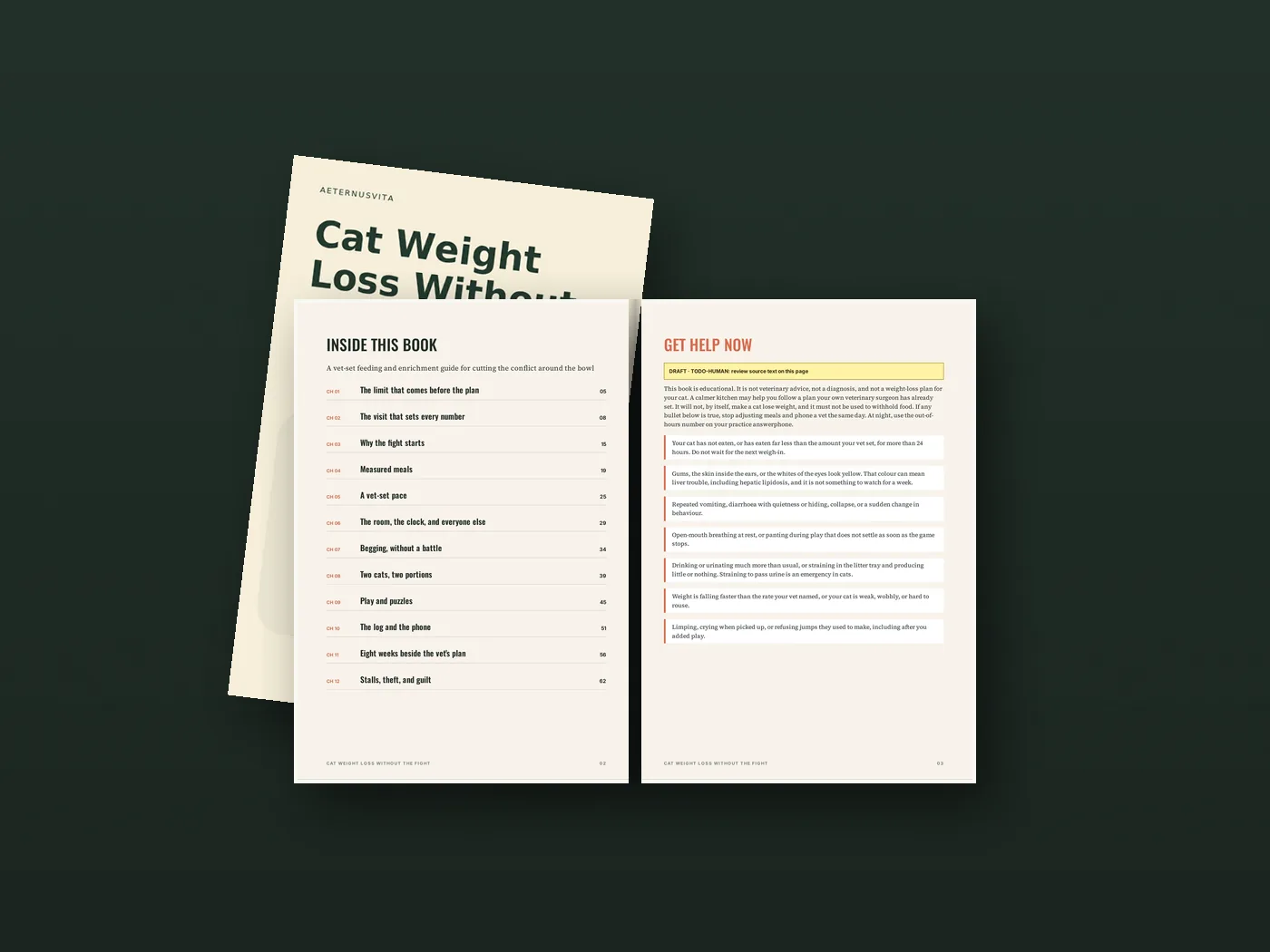
- Safety page: same-day reasons to phone, with blanks for your practice and out-of-hours numbers
- Chapter 1: why a cat who stops eating is an emergency, and why the pace stays with your vet
- Chapter 2: questions for the consult, body condition as the vet scores it, and who decides what
- Chapter 3: five patterns that turn feeding into a fight, plus a worked pair of evenings
- Chapter 4: grams on a kitchen scale, one meal in order, and how to split the day into servings
- Chapter 5: a baseline if your vet wants one, then one step down they have written, with the day's amount still offered
- Chapter 6: the feeding place, the clock, sitters, unplanned food, and a household agreement
- Chapter 7: a redirect for begging, a night card, and a seven-day log
- Chapter 8: two portions, a worked Tuesday, and a station map if a feeder fails
- Chapter 9: short hunt-shaped play, joints, and a puzzle ladder that still gets the portion eaten
- Chapter 10: home weighing, a phone-or-wait table, a weight log and a food log
- Chapters 11 and 12: an eight-week map beside the vet's plan, stalls, a 24-hour card, and the recheck bag
- One combined book PDF, in a ZIP with a README and the licence
Preview the pages
Still have questions?
Will my cat lose weight if I follow this?+
A calmer kitchen may help you follow a plan your own vet has set. It will not, by itself, make a cat lose weight. Phone your vet if weight falls faster than the rate they named.
Can I start a cut tonight?+
Keep the current food and amount until your vet writes a daily figure for this cat and this food. You can log, put a scale by the bag, and feed cats in separate rooms while you wait. If you were about to fast your cat, offer the usual food and book the vet. Gram figures in the book are teaching sketches. The number you serve is the one on your vet's note.
What if my cat stops eating?+
Phone a vet the same day if your cat has not eaten for more than 24 hours. Phone that same day if, for that long, they have eaten far less than the amount your vet set. The safety page also names yellow gums or eye whites, straining to pass urine, and open-mouth breathing at rest. The 24-hour appetite card has blanks for your practice number and the out-of-hours line.
What about two cats, or a dog in the house?+
A shared bowl can overfeed one cat and underfeed the other. Chapter 8 has a worked Tuesday, a setup checklist and a station map if a door or a feeder fails. Dog food left down counts as an unmeasured meal, so lift it or feed the dog out of the cat's reach.
My cat is on insulin, or has another condition.+
Insulin and some other medicines are tied to meals. If the meal size or the meal times have already changed, phone before the next dose. Kidney disease, thyroid disease and sore joints belong in that consult. Food choice and the gram target stay with your vet.
Is this veterinary advice?+
No. It is a feeding guide for carrying out a plan your vet has set. It is not veterinary advice or a weight-loss plan for your cat. Rapid or unsupervised weight loss in cats can cause serious illness, including hepatic lipidosis.
What about the loose flap on the belly?+
A loose flap between the hind legs can be a normal primordial pouch. Ask your vet to tell pouch from fat. You can note that the flap is still there. The grams stay as your vet wrote them.
How do I get it?+
You get an instant download after payment. The ZIP holds one combined book PDF, a README and the licence. The download is 68 pages, including fridge cards you can print or photograph. Refunds follow the policy shown at checkout.
Instant PDF download · 68 pages · Guide and workbook
Educational only. This book is not veterinary advice, not a diagnosis, and not a weight-loss plan for your cat. Rapid or unsupervised weight loss in cats can cause serious illness, including hepatic lipidosis. Written with AI assistance, reviewed by AeternusVita.
Cat Weight Loss Without the Fight