 1 / 5
- 30 plain-text cues
- 14-day puppy plan
- Lead and reactivity
- 56 printable pages
Dog training guide · Workbook
Start the puppy plan, or open a slower chapter
Thirty cues are written in plain text, and the 14-day plan's milestone is the log. Slower chapters cover the lead, reactivity, meals and the vet. You open the page that matches this dog, and you stop where the book tells you to.
- 30 cue cards, each with the word, a hand signal in words, three steps and a mistake
- A 14-day plan in four phases and a 14-row log, with day 14 written as a start
- Lead notes separate a target, plain hauling and worry. Reactivity is counted in weeks
- Door and bowl manners, a vet-visit rehearsal at home, one mistakes page and a helper chart
Dog Training Reference Guide
£15
- +One 56-page PDF with the guide and workbook together
- +Cue cards, phase plans, checklists and fill-in logs
- +A ZIP with that PDF and a README
One-off payment. Download straight after checkout. Hand signals are written in words.
30-day refund. If it isn't useful, reply to your receipt within 30 days for a full refund.
Instant PDF Print or tablet Any device
What it is+
A printable text reference for puppy foundations and everyday manners. You mark the instant they get it right, then pay with food. A new dog follows a 14-day plan. A dog you know opens the chapter for the lead, a trigger, the counter or the vet. Hand signals are words on the page.
What's inside+
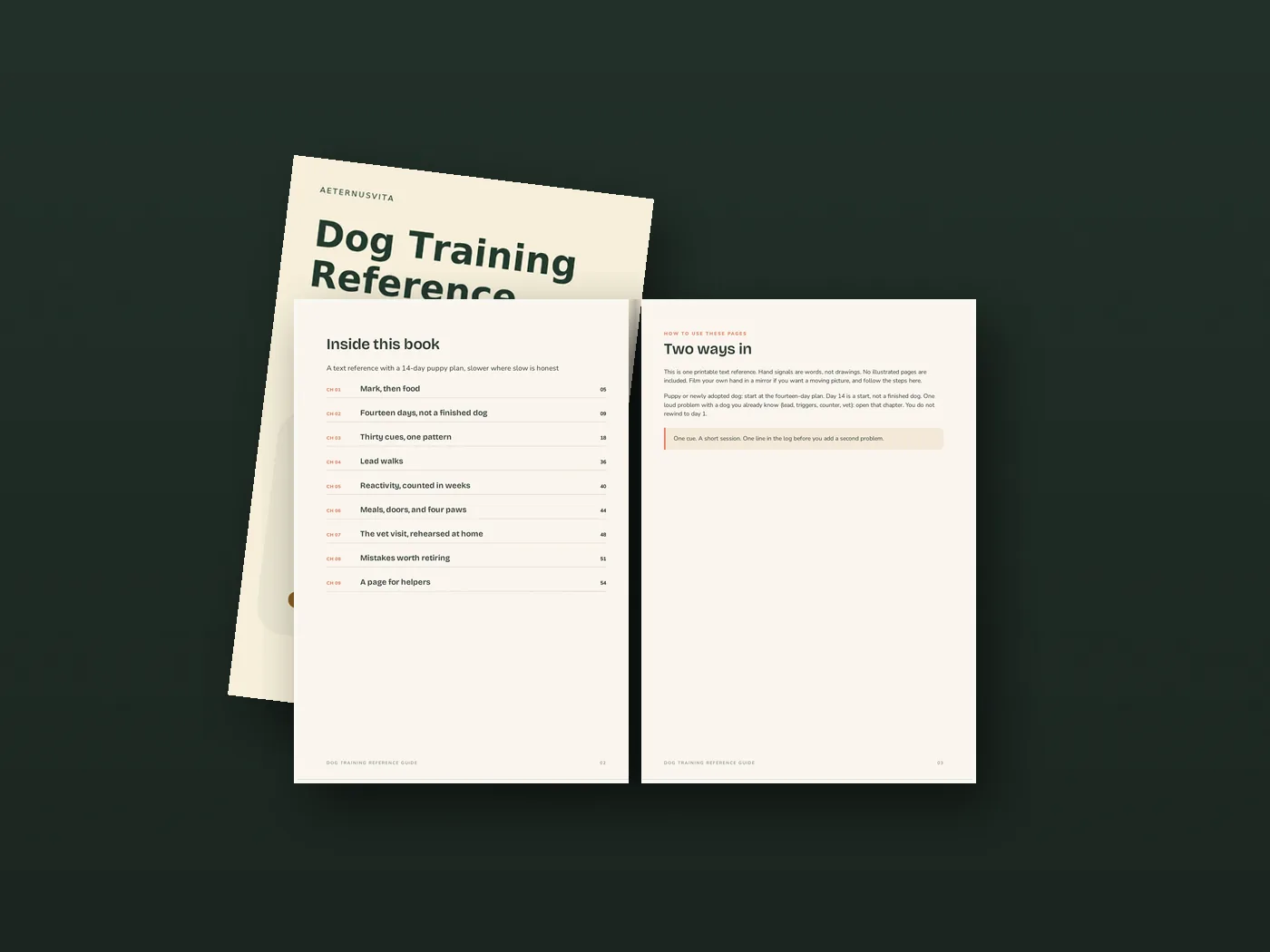
Nine chapters cover the marker, the 14-day plan and 30 cue cards. Later chapters cover the lead and reactivity counted in weeks, then manners, the vet, a mistakes page and a helper chart. Worksheets and logs are in the same PDF.
How to use it+
Start a new puppy at day 1. For a dog you already know, open the loudest chapter directly. Run one cue in a short session and stop while they still want another rep. Write one log line before you add a second problem.
Delivery and refunds+
You download a ZIP right after payment. Inside is one 56-page PDF and a README. Refunds follow the policy shown at checkout.
Made for the dog you are living with this week
A puppy or a newly adopted dog
Days 1 to 3 stay small. You choose an outdoor spot, agree one name, and leave the crate door open so the crate predicts food. You pay an outdoor finish on the spot. A puddle you find later gets cleaned, and the next gap gets shorter.
The lead is the part that goes wrong
You know this dog, so you open the lead chapter directly. One walk names the pull. It may be towards a smell or another dog, hauling with no single target, or a low body with food refused. Barking and lunging, while they can still eat at a distance, move to a log you keep for weeks.
Jumping and bowl manners at home
Right now a jump buys the hello, and paws on the counter buy your attention. The manners pages pay four paws on the floor, and a dog on a mat while you cook. A freeze or a growl at the bowl means you stop and book a qualified reward-based trainer or a veterinary behaviourist.
The problem
Saying it again turns the cue into wallpaper
The sit clip and the two-week plan are still open on your phone. On the walk they lock on, the treats stay in your hand, and the word comes out anyway. That plan treats day 14 as the finish, and the lead hack uses one line for every kind of pull. These pages split the pull, and they end the session when food is refused.
How it works
Mark the instant, pay, then write one line
Say the cue once. At the exact instant they get it right, say yes or click, and deliver food before you talk. If they miss, step in and help, or wait for a quieter room. Use one marker for the whole house. A new dog works the fourteen-day phases. A known dog opens one loud chapter. You add a second problem only after a line is in the log.
This guide vs generic advice
Why the slow pages are slow on purpose
A cue card always carries the same parts, so you already know how to read the thirtieth one. Get the behaviour, then mark and pay. Run the signal with an empty hand, and only then say the word once. The mistake for that cue is printed on the card.
The puppy plan is toilet and name, a rest place, careful exposure, then two words in a quiet room. You stretch any day that overwhelms them. At day 14 the milestone is a filled-in log, with Sit and Come barely started indoors.
A pull towards a smell, a dog who refuses food near a bike, and a growl over a bowl each have their own page. Refused food means add distance and end. A bite, a freeze or a growl means you book a qualified reward-based trainer or a veterinary behaviourist. A sudden change goes to the vet first.
The 14-day plan01
Four phases, with a log on day 14
Days 1 to 3 are toilet, one name and sleep, with the crate door open. Days 4 to 7 build a short calm close. Sort a whine into need, panic or protest before you answer it. Days 8 to 11 add one new thing, only while they still take food. Days 12 to 14 start Sit and Come in a quiet room. Stretch a day that overwhelms them. The 14-row log is what you read at the end, and Come around other dogs stays a longer project.
Thirty cue cards02
Same card shape from Sit to Find it
Thirty cards, two to a page, from Sit, Stay, Down and Come through to Chin and Find it. You lure the behaviour or catch it, mark and pay, then use an empty hand, then say the word once. Free is the release for Stay, Wait, Place, Mat and Chin. This week's sheet takes three cues. Signals are words, so if you want a moving picture, film your own hand in a mirror.
Lead and reactivity03
Decide which pull, then change the distance
Watch one walk before you coach it. A target they can still eat near gets a pause and a paid glance back. Hauling with no single target gets a stop when the lead tightens, then a yes when it goes slack. A low body and refused food means you add distance and leave. Barking or lunging, while food still works far enough away, goes on the four-week distance log. The text says some dogs need months. If you cannot find a distance where they still eat, or there has already been a bite, book a qualified reward-based trainer or a veterinary behaviourist before that chapter.
As easy as it gets
Three moves, then you stop for the day.
1Step 1
Open the matching pages
A new dog starts at day 1, including three looks at their name. A dog you know gets the shortest version of the loudest chapter.
 2
Step 2
Keep the session short
Say the one cue a single time. Mark it, pay before you chat, and stop while they would still have done another rep.
 3
Step 3
Write a single log line
Write the win and the miss, or the distance where food worked. Refused food means the setup was too close or went on too long.
Timeline
What to expect
Homes and dogs differ. Here is how the book is designed to be used.
Keep the first session small
A new dog gets the outdoor spot, one name, an open crate and three marked looks. A dog you know gets one short pass at the loudest chapter. You write one line. A second problem waits.
What's inside
- Opening pages: two ways in, the marker rule, and when to get a person
- Chapter 1: mark then food, a four-beat fridge card, and a reward worksheet
- Chapter 2: a four-phase 14-day plan, a whining worksheet, and a 14-row log
- Chapter 3: 30 cue cards from Sit to Find it, and a sheet for three cues this week
- Chapter 4: which pull this is, two branches, a fear note, and a seven-walk log
- Chapter 5: a distance protocol for reactivity, a stop list, and a four-week log
- Chapter 6: greetings, counters and bowls, the guarding line, and weekly ticks
- Chapter 7: paw, ear, mouth and nail handling at home, plus the vet bag and questions
- Chapter 8: one common-mistakes page, then the words your household will keep
- Chapter 9: a helper sticker chart, with an adult in charge of every rep
- Back page: the next session to run, and the limits of the book
Preview the pages
Still have questions?
Are the hand signals illustrated?+
Signals are written in words. This PDF has no illustrated pages. If you want a moving picture of your own hand, the book suggests filming it in a mirror and following the steps on the card.
Does the 14-day plan finish the training?+
Day 14 is a start. The milestone in the plan is a toilet rhythm you are still logging, and Sit and Come begun in a quiet room. Reactivity is organised in weeks, and the text says some dogs need months. For how long a puppy can hold on, ask your vet, then shorten the gap from what your log shows.
What if my dog has bitten, or guards food?+
Stop the exercise and book a qualified reward-based trainer or a veterinary behaviourist if the dog has bitten, if you feel unsafe, or if a child is at risk. Do the same if guarding already includes a freeze, a growl or a snap. The book can sit alongside that person for ordinary manners. A sudden behaviour change needs a vet first. Pain can look like stubbornness.
What do I download?+
A ZIP, straight after payment. It holds one 56-page PDF, with the guide and the workbook pages in the same file, and a README. Print the logs, checklists and sticker chart and write on them.
What gear does the method use?+
A marker, either the word yes or a clicker, and food or a toy they will work for today. On walks, a fitted harness carries the pull instead of the neck. The method is marker, food and management. Choke chains, prong collars, shock, spray collars and dominance games are outside this method.
Can a child use the helper chart?+
An adult sets up every rep. The helper says the one agreed word and hands over the treat, then earns a sticker. Reactivity, off-lead Come and bowl work stay with you. The chart is one calm cue, and you are watching.
Is this veterinary advice or a treatment?+
It is educational guidance for everyday manners and puppy foundations. Your vet still answers vaccines, pain, parasites and which signs should make you phone the same day. If a paw touch brings panic or a bite, you stop and ask the vet to check for pain before you call it manners.
Instant PDF download · 56 pages · Printable workbook
Educational guidance for everyday manners and puppy foundations. Not veterinary advice, and not a substitute for a certified trainer or a veterinary behaviourist where there is aggression, a bite, guarding or significant fear. Written with AI assistance, reviewed by AeternusVita.
Dog Training Reference Guide