 1 / 5
- One cue, one action
- Three-day cue watch
- Yes, no or N/A
- 40 printable pages
Habit stacking workbook · Cue, action, review
Put one small action after a cue you already hit
The sentence names the event, then one action small enough for a messy day. Test it on ordinary days and revise the plan if it misses.
- Events from days you lived, grouped by morning, midday, evening and weekend
- Watch one cue for three ordinary days before you attach the new action
- A minimum-action card with a finish line, and any extra kept off the minimum
- Yes, no or N/A for the week, plus one repair that changes a single part
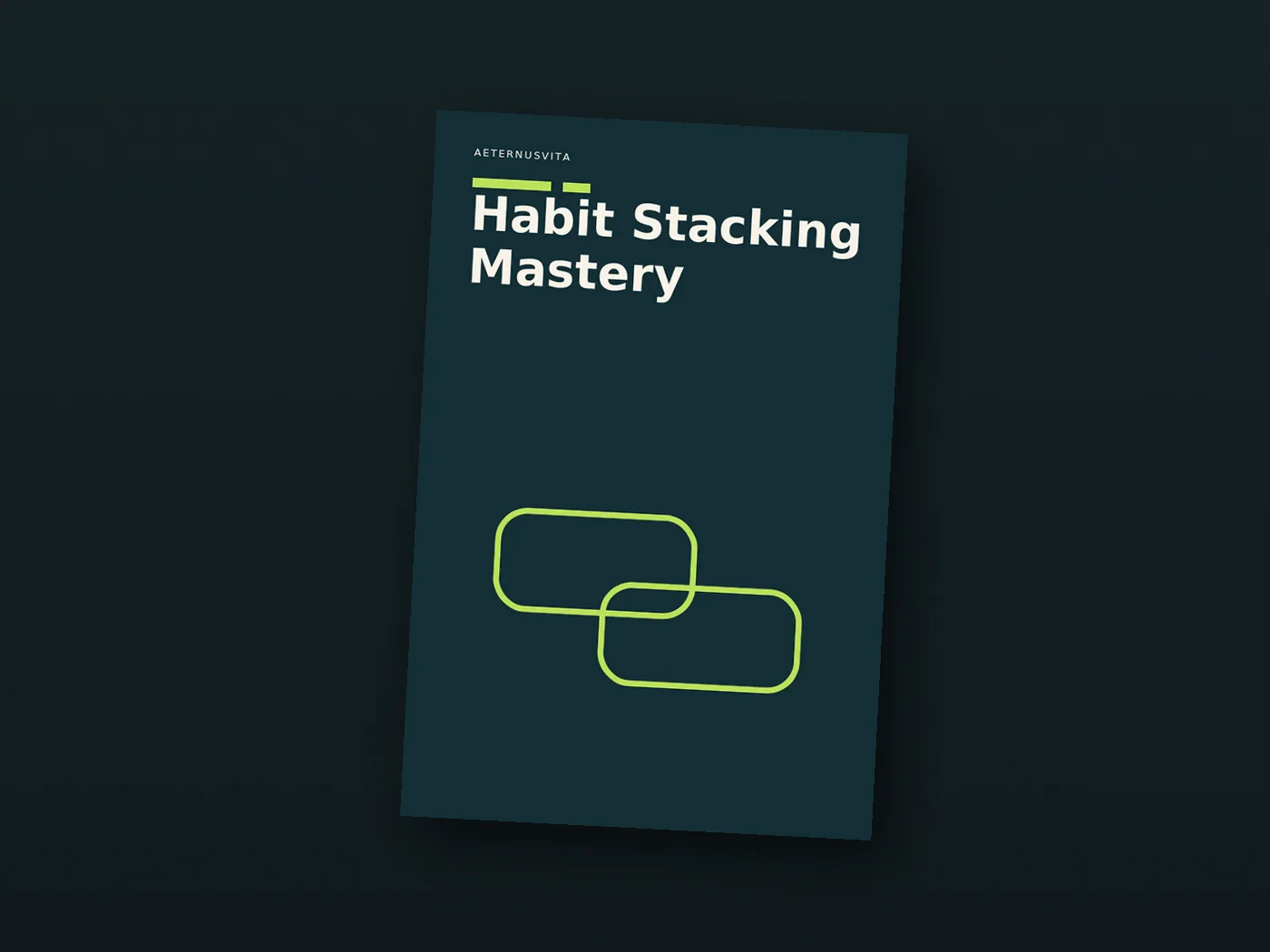
Habit Stacking Mastery
£13
- +One 40-page PDF, with the guide and the workbook in a single file
- +Audit, fit scorecard, minimum-action card, chain map and repair card
- +A ZIP with the PDF and a README
One-off payment. The file is ready straight after checkout.
30-day refund. If it isn't useful, reply to your receipt within 30 days for a full refund.
Instant PDF Print or tablet Any device
What it is+
A workbook for placing one small new action after an event you already do. You audit real days, write one sentence, and test it. When the record shows a gap, you repair the plan.
What's inside+
You get a cue audit and a fit check, then a smaller first action. A short chain and the repair pages follow. The worksheets sit in the same 40-page PDF.
How to use it+
Fill the inventory from the last few days you lived. Watch one event for three days. Then write the sentence and record a week as yes, no, or not applicable. Change one thing after you read the pattern.
Delivery and refunds+
Instant download after payment: one ZIP with the 40-page PDF and a README. Refunds follow the policy shown at checkout.
Made for the habit that never finds a moment

Your mornings keep changing
Some events vanish at the weekend. A weekday cue may be missing on those days. The audit uses the last few actual days, and an evening event can be the cue when mornings vary.

The aim is too big to tick
A wish to be organised, or to read more, needs an action someone could see. The worksheet uses a small version, such as a paragraph after you sit down.

The second link unsettles the first
The first action had started to show up. A second one disrupted it. Review the first link. Remove the new one if it keeps disrupting that link.
The problem
The cue is a clock time or a mood
Every morning is a stretch of time. Feeling motivated shifts from day to day. The workbook asks for an event from a real day, such as the mug in the sink or the notebook closing. Rate that event for reliability. A cue that often fails to appear makes the new action look like the failure.


How it works
One sentence, then a short test
The sentence has two blanks. After I [an existing event], I will [a small new action]. The event in the first blank is the anchor. Watch it for three ordinary days and tick each time it appears, before you attach the action. Shrink the action until the next day's mark is a plain yes or no. For the test week, mark yes, no, or not applicable. If the record shows a gap, change one piece and run it again.
This workbook vs generic habit advice
Why you watch the cue before you add the habit
The anchor is the event you attach the action to. A useful one can be dull. The mug in the sink is easier to spot than a routine you have only on ideal days. If the event is hard to remember, pick a steadier one.
Give the first action a finish line you can see, such as one paragraph or one item put away. Anything past that is optional on the card. A short day still counts as complete, and enthusiasm stays off tomorrow's minimum.
The weekly grid shows whether the cue was missing or the action was too big. One word is enough for the obstacle. Change that one thing, then look again at the next review.

The anchor audit01
Three ordinary days before the new action
List morning, midday, evening and weekend events from this past week. Pick one candidate and tick it each time it appears. Do that for three ordinary days before you attach a new habit. If it rarely shows up, replace it. The chapter ends when you have filled in one line: I will notice when I ____.
The minimum action02
One plate counts. The kitchen can wait.
The card names the anchor and the small action, then the moment the action is complete. Any extra has its own line. A good day leaves tomorrow's minimum where you set it. In the book's example, one plate put away is complete and the rest of the kitchen stays optional. The same split works for a paragraph or a priority.

When a stack misses03
A missed day stays in the record
Each day you mark whether the anchor occurred and whether the action followed. Add one word for the obstacle, such as travel, forgot, materials or time. After the week, count the opportunities first and the actions second. The repair card names one weak link and the single adjustment you will test next.

As easy as it gets
The same three moves each time you test a stack.
1Step 1
Audit a real day
List events that already happened. Watch one candidate for three ordinary days before you attach anything.
2Step 2
Write one sentence
After I [this event], I will [this small action]. Shrink it until a messy day can still reach the finish line.
3Step 3
Mark the week
Mark yes, no, or not applicable. If the cue was rare, change the cue. If the action felt heavy, make the minimum smaller.
Timeline
What to expect
The examples are illustrations. This is the order the workbook suggests.
Write what already happened
Fill the anchor inventory from the last few actual days. Finish with one line about the event you will notice. Leave the new habit off the page.
What's inside
- Chapter 1: what counts as an anchor, an inventory of real days, a comparison table and a three-day watch
- Chapter 2: match the action to the moment, with a mismatch table and a fit scorecard from 1 to 5
- Chapter 3: shrink the first action, write a minimum-action card, and place the materials where the cue happens
- Chapter 4: a chain map and a stress test, with a rule for leaving the next link out
- Chapter 5: a one-week record, an if/then backup, a repair card, a seven-day review and a thirty-day reflection
- Back page: keep the useful part, stop a routine that costs more than it gives, and read the educational note
Preview the pages
Still have questions?
What if I miss a day?+
Earlier days stay on the record. Note what happened at the moment the stack was supposed to start.
Do I need a printer?+
The pages are worksheets, so a printer makes them easier to fill. You can also keep the PDF open and copy the prompts into a notebook.
Is this treatment for a clinical habit problem?+
No. This is an educational workbook. It does not diagnose or treat a clinical concern. When a self-guided routine is not enough, you need qualified support, which these pages do not replace.
What if the goal touches health, money or safety?+
A medical, financial or safety decision needs professional advice. This worksheet does not replace that advice. Skip any anchor tied to medication, driving, childcare or another safety task. Choose a different cue.
How soon will the habit feel automatic?+
A week is for seeing what happened. The thirty-day page is a review, where you decide what to continue or stop. It is not a deadline for the action to feel automatic. Keeping a reminder is a valid result.
Can I add three habits at once?+
Start with one new action. Add a second link only after you have reviewed the first. If two boxes on the expand checklist are still uncertain, stay with the first link.
How do I get it?+
After payment you get an instant download: one ZIP with the 40-page PDF and a README. The guide and the worksheets are in that single PDF.
Instant PDF download · 40 pages · Print the worksheets
Educational only. This workbook does not diagnose or treat a clinical concern and is not a substitute for qualified support. Written with AI assistance, reviewed by AeternusVita.
Habit Stacking Mastery