 1 / 5
- 55 printable pages
- Real bell times
- 5 reading, 5 maths
- Safeguarding notes
K-5 substitute plans · Guide + workbook
Sick this morning? Leave the filled pack.
A 55-page K-5 bundle with a cover sheet, a timetable and activity choices for a substitute to pick up. You fill the class facts on a day you are well.
- Cover sheet for the room, the office, a neighbouring teacher, lunch, dismissal and the assembly point
- Timetable rows for your real times, one prompt per block, where the materials are, and an early finisher
- Five reading choices and five maths choices, plus writing, art and movement
- Behaviour prompts, an end-of-day report and ten indoor recess ideas
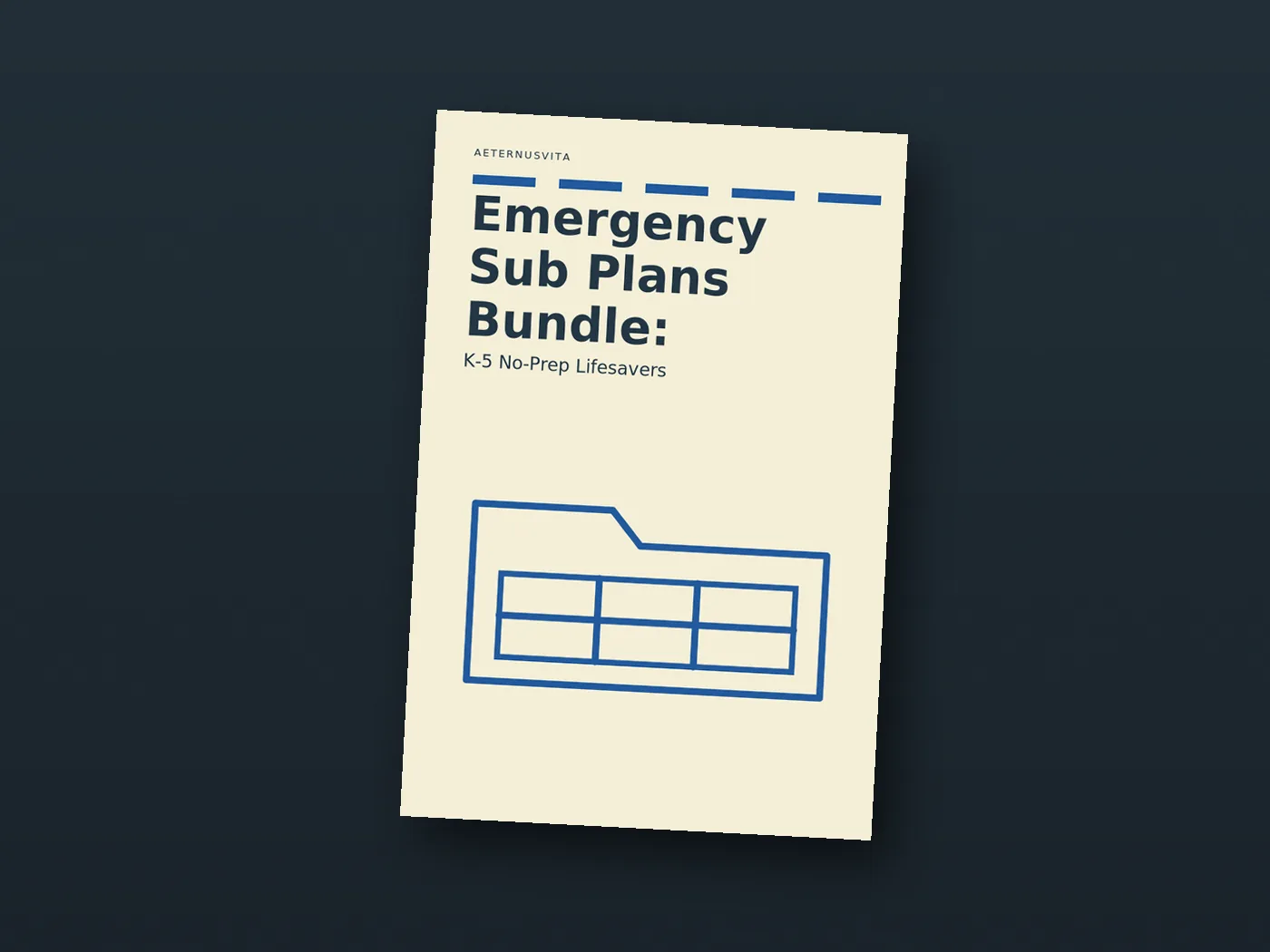
Emergency Sub Plans Bundle: K-5 No-Prep Lifesavers
£15
- +55-page PDF with the guide and workbook in one file
- +Cover sheet, daily timetable and end-of-day report
- +Reading, maths, writing and indoor recess banks for your class
One-off payment. Download straight after checkout.
30-day refund. If it isn't useful, reply to your receipt within 30 days for a full refund.
Instant PDF Print or tablet Any device
What it is+
A grab-and-go K-5 substitute bundle. The cover sheet, timetable and end-of-day report are the pages you hand over. Reading, maths and writing are frameworks with prompts you can pass on. You choose the text, the number range and any question that should match this week's work. Behaviour pages and an indoor recess bank are in the same PDF.
What's inside+
Five chapters. Each one has a five-step method, a worked example, a worksheet, a checklist and an action card. The back of the PDF holds the cover sheet, the daily timetable and the roster and end-of-day report. The same file includes ten reading and maths choices, writing and art prompts, and ten indoor recess ideas.
How to use it+
Read the safety and scope notes first. On a calm day, fill the cover sheet and copy your real bell times. Pick activities from the banks, or write this week's prompt into the timetable. Leave the folder in a named tray. Review the sheet each term and after any timetable change.
Delivery and refunds+
Instant download after payment. One 55-page PDF, guide and workbook together, in a ZIP with a README. Refunds follow the policy shown at checkout.
Made for the morning you cannot get to school
You are ill before the bell
The class still needs the room, the times and a person the substitute can call. The cover sheet is the page you fill on a well day and leave for that adult.

You keep a folder for cover
The sheet asks for a review each term and after any timetable change. It suits a teacher who would rather update a dated folder than start from a blank page on the next absence.
You teach a mixed K-5 class
The banks keep a simpler output beside a harder extension. You set the text and the number range to the pupils in the room. The reading notes say the substitute can offer an oral answer when school policy allows it.
The problem
The handover is still in your head
You are ill, and an unfamiliar adult is about to take the class. They need the room, the bell times, the safeguarding route and a colleague who can answer. Those facts stay in your head until you write them down. A blank board means the activities get invented on the spot. Health and support details belong in the school-approved record. The sheet you leave is the public handover, written while you are well.

How it works
Write your facts, then set the choices
Each chapter asks for one decision, five steps, a worked example and your own worksheet. An action card at the end of the chapter stays with the folder. The cover sheet records the room, the office contact, the neighbouring teacher, lunch, dismissal and the assembly point. The timetable uses your real bell times. Every block gets one activity, a resource location, an early finisher and a transition cue. Activities in the banks name a prompt and an end product, using a text, paper or the board already in the room.
This bundle vs generic advice
The blanks take your school's facts
The sheet splits public lines from private notes. The substitute sees the office contact, the neighbouring teacher, the seating chart's location and the assembly point. Health and support details stay in the school-approved record. A line on the sheet says where those notes live.
Bell times come from your real day. In the reading example, the substitute puts a prompt on the board and gives time for independent reading. Pupils write one question. The work is collected at the end.
Tasks name the materials and the end product. The numbers are meant to change with the year group. A room count can stay a tally, and older pupils can work out the difference. If this week's curriculum is already in the room, the notes say to use it. They also say to keep unfamiliar tasks off assessment.
The handover01
What the substitute needs at the door
Chapter 1 is the sheet you leave at the door. You write the school-approved contact and the start and end times. You note where the seating plan lives and which tray holds the materials. Then you test the sheet with a colleague. The worked example names the office, arrival, lunch and the assembly point. Pupil records stay in the school system. Before the folder is used, the teacher or the office checks local safeguarding, data rules and emergency procedures.
The day02
Bell times, then one job per block
Chapter 2 is the spine of the day. You copy the real bell times, choose one activity for each block and keep a slot for the end-of-day report. Five reading choices include drawing a setting and labelling two clues, and comparing two characters with one detail each. Five maths choices include counting three groups of classroom objects, and a word problem in the class's current number range. When the week's lessons are already planned, the sheet says to use them.
Recess and close03
A calm line, then a short report
Chapter 5 gives an unfamiliar adult the class rule to post and a neutral line to rehearse. You pick a recess option that fits the room. The sample line asks for table-level voices. It offers the quiet table and a check-back in two minutes. The report has lines for what was finished and where the work went. A further line is for objective facts the school should follow up. Ten indoor ideas include a story chain and a collaborative mural. You set a start signal and a stop signal, and you name a seated alternative. Serious incidents go to the school at once.
As easy as it gets
Three moves, done before you need them.
1Step 1
Fill the cover sheet
Write the room, the contacts, lunch, dismissal and the assembly point. Pupil support details stay in the school system. Test the sheet with a colleague.
 2
Step 2
Copy the bell times
Give each block one activity, a resource location, a transition phrase and an early finisher. Pick from the banks, or write in this week's own plans.
3Step 3
Leave it in the tray
Put the folder where you said it would be. Keep the end-of-day report with it, so the substitute can note what was finished and where the work went.
Timeline
What to expect
Schools and classes differ. The pages are designed to be used like this.
Write the standing folder
Read the safety and scope notes, then start one chapter. Complete the cover sheet and copy the real bell times. Where a fact is missing, leave the blank and write who will confirm it.
What's inside
- How to use this book: safety and scope notes before any chapter
- Chapter 1, The handover that works: contact route, start and end times, seating plan, named tray
- Chapter 2, A day with clear transitions: real bell times, early finishers, end-of-day slot
- Chapter 3, Reading activities ready to run, using a text already in the room
- Chapter 4, Maths, writing and movement: prompt, materials and an end product
- Chapter 5, Behaviour, recess and closure: class rule, neutral language, short handover
- Substitute cover sheet, daily timetable, and a roster and end-of-day report that points to the secure list
- Five reading choices, five maths choices, writing and art prompts, and ten indoor recess ideas
Preview the pages
Still have questions?
Do I still write my own class facts?+
Yes. The cover sheet, timetable and end-of-day report are templates with the prompts printed. You enter the room, the contacts, the bell times and the activity you want. The reading and maths pages give choices to pick from, and they leave room for the text and the number range your class uses. If this week's lessons are ready, the timetable has a column for that exact prompt.
What do I download?+
One 55-page PDF, with the guide and the workbook in the same file, inside a ZIP with a README. The download starts after payment. Refunds follow the policy shown at checkout.
Will one worksheet fit every year from K to 5?+
The book keeps the numbers adjustable for K-5. Younger pupils can draw and label. On a counting task, older pupils can work out a difference. You set the reading level and the arithmetic to the class.
Where do pupil details go?+
Private health and support details stay in school-approved records. The cover sheet has a line for where the substitute finds those notes, and for the colleague who can explain them. The end-of-day report asks for objective facts. Concerns go through the school route. Follow your school's privacy policy.
Is this a behaviour programme?+
No. Chapter 5 gives an unfamiliar adult a class rule to post and a neutral line to rehearse. You record what happened. Serious incidents go to the school. Rewards that conflict with the class plan stay unused. Your school's own rules govern the room.
What if our timetable or a support plan differs?+
Local rules win. A generic timetable in the book cannot override a school schedule or an individual support plan. Check safeguarding, data and emergency procedures before the folder is used. If a step depends on a rule you have not confirmed, stop and ask the person responsible.
Do I need a printer?+
The PDF is made to print and leave on the desk. You print the cover sheet, the timetable, the activity choices and the end-of-day report. It is 55 pages.
Instant PDF download · 55 pages · Print and leave on the desk
Educational only. Check your school's safeguarding, privacy and emergency procedures before use. This is not medical advice. No particular classroom result is promised. Written with AI assistance, reviewed by AeternusVita.
Emergency Sub Plans Bundle: K-5 No-Prep Lifesavers