 1 / 5
- 12 project cards
- Fabric and patterns
- Next sewing session
- 54 printable pages
Quilting planner · Guide and workbook
Record the next sewing session on the card
Twelve project cards record the recipient, the finished size, fabric already owned and one next sewing session.
- Twelve project cards with a stage: idea, cut, pieced, quilted or bound
- A fabric line for fibre, colour, usable amount, storage place and project
- Yardage fields you copy from your pattern, then check on one sample block
- A UFO status for each unfinished quilt: finish, pause, repurpose or gift
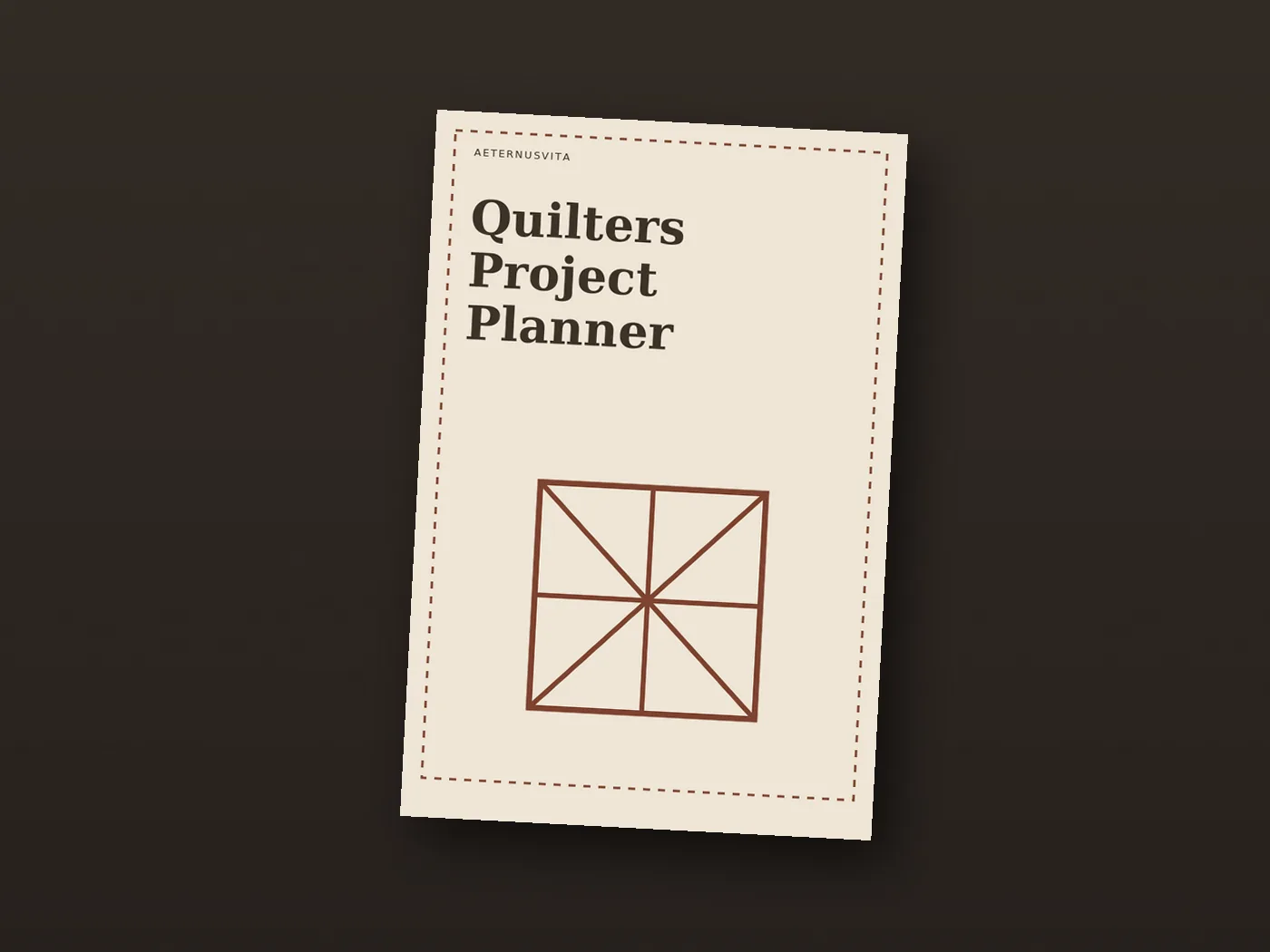
Quilters Project Planner
£11
- +54-page PDF with the guide and the workbook together
- +Twelve project cards you fill in yourself
- +Field lists for fabric, patterns, yardage, UFOs and cost
One-off payment. Download the ZIP after checkout.
30-day refund. If it isn't useful, reply to your receipt within 30 days for a full refund.
Instant PDF Print or tablet Any device
What it is+
A fill-in planner for hobby quilting. You write size, recipient, technique and finish date before you buy more fabric. Later pages hold the fabric, the pattern source, yardage notes, unfinished quilts and cost.
What's inside+
The book is four chapters and 54 pages. Each chapter has a five-step method and a decision table, then a worked example, a worksheet, a checklist and an action card. Twelve project cards follow, with tables for fabric, unfinished quilts and cost.
How to use it+
Read the scope notes first. Work one chapter at a time. Understand the decision, try the worked example and fill in your own facts. Keep the action card where you sew. Leave a blank where the answer is still unknown.
Delivery and refunds+
After payment you download a ZIP with the 54-page PDF and a README. Refunds follow the policy shown at checkout.
Made for a sewing table with quilts still open

The drawer is still a guess
The inventory line is fibre, colour, usable quantity and the place it is stored, plus which quilt that piece is for. In the book's example, a blue cotton remnant is about half a metre, prewashed, in drawer B.

Fabric came home before the plan
The pieces are on the machine. Size, recipient, technique and finish date are waiting to be written. You write them in Chapter 1, before the next fabric purchase, and you add a next action beside that note.
A dated gift and an empty pattern line
The worked example narrows a lap quilt for a friend to one block pattern, two fabric groups and a target gift date. A separate note is there for quilting help. You replace the example with your own recipient, date and pattern.
The problem
A half-started quilt takes the table
The fabric often comes home first. Intended size, recipient, technique and finish date are empty, and the pieces sit on the sewing table. Remnants wait in drawers with the usable length unwritten. An unfinished quilt sits beside them with the next sewing step blank. Owned fabric and a shop receipt share one pile. The measurement, the next action and the amount you paid each have a line in this planner.

How it works
Each open quilt gets one card
Cards 01 to 12 start blank. You fill in the name, the recipient and the pattern source, then finished size and block count. Fabric you already own has its own line. New materials get the receipt date and the amount paid. Stage is idea, cut, pieced, quilted or bound. The last prompt is one next sewing session, and what that session will complete. Four chapters follow the card. You define the quilt, then inventory fabric and patterns. You copy the yardage fields from your pattern and make one sample block. You set a status on each unfinished quilt and a date for the monthly review.
This planner vs generic quilting advice
Why the card starts before the shop
Write down intended size, recipient, technique and finish date before you buy more fabric. That keeps a half-started idea from occupying the whole sewing table. The project card holds one next action beside that record.
The fabric worksheet asks where the piece is stored, whether it is prewashed and which pattern owns it. Another prompt asks what you must check before cutting. A worked answer in the book is about half a metre of blue cotton, prewashed, stored in drawer B.
On a paused quilt, the worked example uses one next action: trim four blocks and choose backing. A cost row records the purchase date, the item and the amount on the receipt. Fabric you already owned stays on its own line.

Project cards01
Each of the twelve quilts has a page
Before you buy or cut, the card asks for the pattern source and a check of that pattern's cutting instructions. At review you mark finish, pause or repurpose, and you explain the choice. The card holds the project as it stands today. Its last prompt is one next sewing session.

Fabric and patterns02
Measure the piece, then name the drawer
Group the fabric by where it is stored, then measure each piece. Label the container and index the pattern. Link that fabric to a project. The pattern line points to the original source and notes whether you have printed it or licensed it. Measure the usable amount before you cut. Folds, shrinkage and print direction change the yield.
Yardage and UFOs03
Copy the pattern, then pick a status
The yardage page records block count, finished block size, fabric allowance, backing and binding. Exact cutting stays in the original pattern. You make one sample and check the seam allowance, then update the line with the fabric you used. On the unfinished list, every project has a blocker, one next action and a review date. The status choices are finish, pause, repurpose or gift.

As easy as it gets
Three moves, for one quilt.
1Step 1
Name the project
Write the size, the recipient, the technique and a finish date. Choose the pattern source and note why that pattern.
 2
Step 2
Measure what you have
Record fibre, colour, usable amount and the drawer. List materials still missing, and index the pattern with its source.
3Step 3
Set the next session
Name one sewing session and what it will complete. On a quilt already underway, set a status and keep that next action on the card.
Timeline
What to expect
Every sewing room is different. Here's how the book is designed to be used.
Fill in card 01
Read the scope notes and the starting-point prompts. Complete project card 01 with facts you already have. Where a fact is missing, write who can confirm it, and by when.
What's inside
- How to use the book, plus a starting-point worksheet for what you know and what is uncertain
- Chapter 1: Define a finishable quilt, with a lap-quilt worked example and an action card
- Chapter 2: Inventory fabric and patterns, including source, print and licence
- Chapter 3: Block and yardage field list. You copy cutting quantities from your pattern
- Chapter 4: Unfinished-quilt tracker and a cost log taken from receipts
- Project cards 01 to 12, each with a stage and one next sewing session
- Tables you can copy when you need another fabric, UFO or cost row
Preview the pages
Still have questions?
Does it work out yardage for me?+
No. The yardage page is a field list for block count, finished block size, fabric allowance, backing and binding. You copy the cutting quantities from your pattern, make one sample and check the seam allowance.
Will I finish more quilts if I use this?+
The unfinished-quilt list gives each project one next action and a status: finish, pause, repurpose or gift. Finishing more quilts is an intention the pages can record. Dates on the record show what you decided, and when.
What if I am only guessing the length?+
Leave the line blank. The book says a blank is better than an invented fact. Add who will confirm it, and by when. Before you cut, measure the usable fabric. Folds, shrinkage and print direction change the yield.
Do I need a printer?+
The pages are laid out for printing and filling in. Print the cards you are using and leave the rest in the PDF.
Does it teach quilting technique?+
It is a planner for records: projects, fabric, patterns, yardage fields, unfinished quilts and cost. You note the pattern's original source, and whether you have printed it or licensed it. Licensing and measurements stay with you. Where a decision affects safety, health, the law or money, follow local rules and ask a qualified person.
How do I receive the file?+
After payment you download a ZIP with the 54-page PDF and a README. Refunds follow the policy shown at checkout.
Instant PDF download · 54 pages · Print and fill in
Organisational content for hobby quilting. You take measurements from your pattern, and you record costs from your own receipts. This is not financial advice. Where a decision affects safety, health, the law or money, follow local rules and ask a qualified person. The book does not promise you will finish more quilts. Written with AI assistance, reviewed by AeternusVita.
Quilters Project Planner