2026-10-16 · 3 min read
How a 14-Day Puppy Plan Builds Obedience Without Overwhelm
Puppies learn fast and forget faster — which is why the structure of the first two weeks matters more than any single technique. The 14-day puppy plan…
By AeternusVita
We make the products recommended here.
Puppies learn fast and forget faster — which is why the structure of the first two weeks matters more than any single technique. The 14-day puppy plan in the Dog Training Reference Guide works by sequencing tiny wins. Here is the logic behind it and what each phase accomplishes.
Days 1–4: safety, names, and settling
A new puppy's brain is flooded: new smells, new people, no littermates. Training "commands" on day one wastes the window when the pup most needs to learn that this place is safe. So the plan starts with foundations: name recognition (say it, reward the glance), a settling spot, and the rhythms of feeding, potty, and sleep.
Owners often mistake this phase for "doing nothing." It is the opposite — a puppy that learns its name and a safe resting place in week one learns everything else twice as fast in week two. Skipping foundation to rush to "sit" is the most common beginner error, and the plan is designed to prevent exactly that.

Days 5–10: core commands in short sessions
With attention and routine established, the plan layers in core commands from its 30-outline bank: sit, down, stay, come, leash manners, and polite greeting. Sessions stay short — a few minutes, several times a day — because puppy attention spans are measured in minutes and ending on a success beats drilling to failure.
Each command outline follows the same positive-reinforcement shape: lure or capture the behavior, mark and reward it, then gradually add the cue word. That consistency across all 30 outlines is doing quiet pedagogical work: the owner learns one method deeply instead of 30 tricks shallowly.
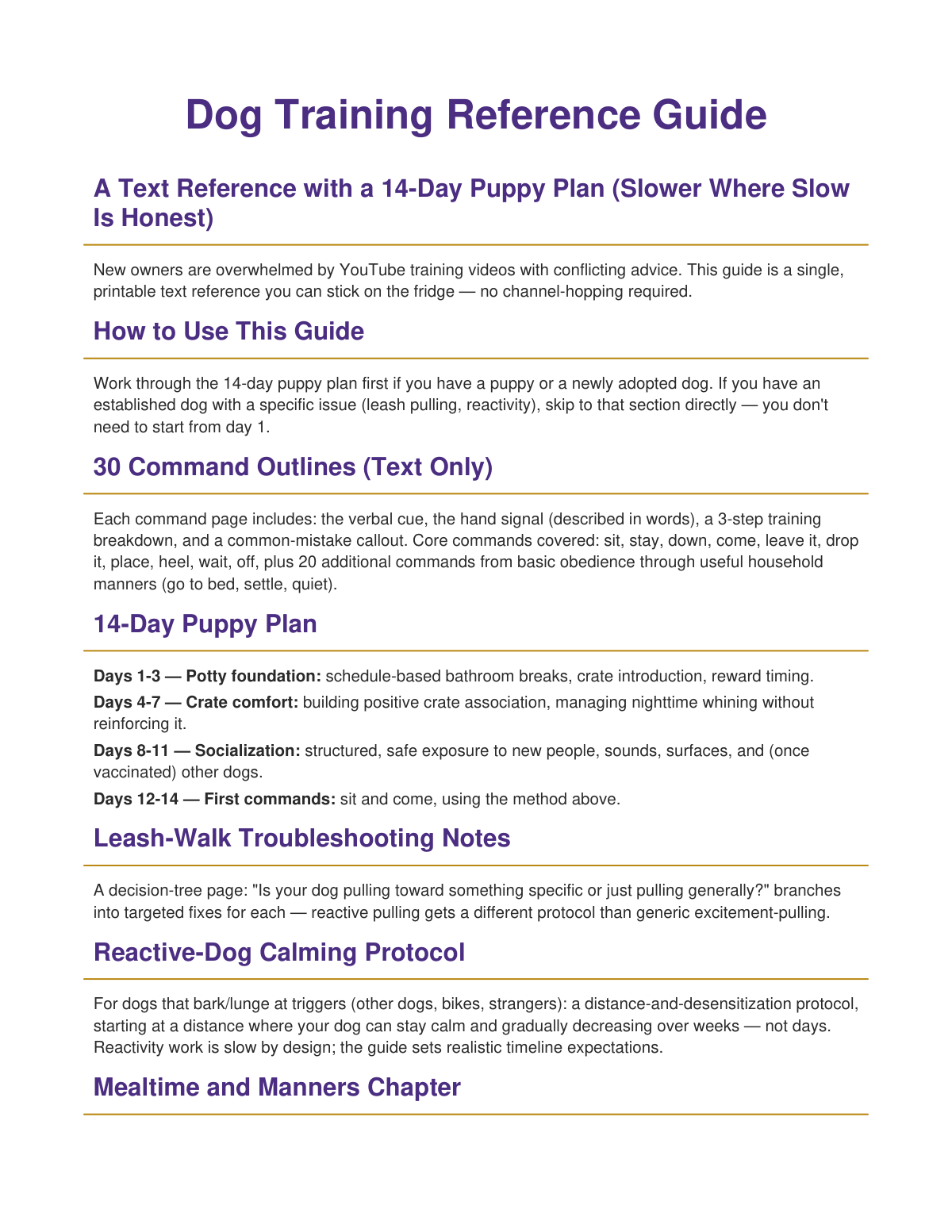
Days 11–14: real-world proofing, slower where honest
The final phase takes show on the road: practicing known commands with mild distractions, on walks, around visitors. This is also where the plan's honesty shows — its protocol explicitly allows slowing down where slow is honest. A pup that is not ready for street distractions repeats foundation work without shame. The guide's reactive-dog calming protocol and leash-walk troubleshooting notes exist precisely for pups that find the world overwhelming, and using them is presented as normal training, not failure.
How this book helps
The Dog Training Reference Guide (£15, instant download) contains the full 14-day plan, all 30 command outlines, the reactivity and leash protocols, mealtime manners, vet visit prep, and a companion workbook — a text reference you can check mid-session from your phone.
Puppy life also means mess, on schedule: The 15-Minute Zone Clean (ADHD Edition) keeps the house sane with 15-minute zone resets. And for building the calm, patient mindset that good training requires, the daily practice format of the 21-Day Abundance Challenge transfers surprisingly well from owner to handler.
Related articles
2026-10-15 · 3 min read
Best Puppy Training Guide for First-Time Owners: What to Look For
Bringing home your first puppy is joyful and slightly terrifying: the biting, the 3 a.m. whining, the leash that turns walks into wrestling. A good…
Read article →2026-10-17 · 3 min read
How to Fix Leash Pulling and Reactive Barking With a Troubleshooting Routine
Leash pulling and reactive barking are the top two reasons owners call training "not working." Both are fixable with the same troubleshooting routine…
Read article →